
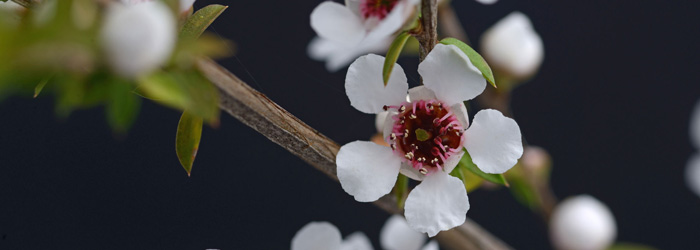
Our company has been providing Manuka oil since 1995. Most customers who order this product become repeat buyers. Due to its exceptionally strong antibacterial activity and its effectiveness in reducing inflammation and itching, many customers use it for a wide range of conditions.
The origin plant, the Manuka tree, is known by its English name, “Tea Tree.” However, it is often mistaken for the Tea Tree widely distributed in Australia. In reality, they are entirely different species. Manuka oil exhibits particularly strong antibacterial activity against Gram-negative bacteria (bacteria with a thin cell wall, such as E. coli, Neisseria gonorrhoeae, and Vibrio cholerae), with potency reported to be more than 30 times that of Tea Tree oil.
New Zealand’s indigenous Māori people have widely utilized this tree as a medicinal plant, making use of everything from its seeds to its roots. It is said that Captain Cook, the British explorer who discovered New Zealand, learned from the Māori people and brewed a tea from the leaves and stems of the manuka plant to treat his crew’s illness caused by the fatigue of long sea voyages. Compared to Australian Tea Tree oil, Manuka oil has been found to exhibit particularly strong antibacterial activity against Staphylococcus aureus, a bacterium recently highlighted as a key factor in worsening atopic dermatitis. Additionally, it possesses natural antihistamine-like activity, offering rapid and long-lasting itch relief compared to ethanolamine-based drugs (1).
(*1) Ethanolamine-based drugs: These are medications used for skin conditions, including diphenhydramine hydrochloride (brand names: VENA, RESTAMIN KOWA). They have strong sedative effects due to their action on the central nervous system, often causing drowsiness, which necessitates nighttime administration. Dimenhydrinate (Dramamine), used as an anti-vertigo medication, also belongs to this category.
Therefore, it is particularly effective for atopic dermatitis, providing immediate relief from itching while preventing secondary infections caused by bacteria known to aggravate the condition. Its notable anti-inflammatory properties have earned strong support from our customers.
Reference: Customer Feedback
النبات الأصلي، شجرة المانوكا، يُعرف بالاسم الإنجليزي “شجرة الشاي”، إلا أنه غالبًا ما يُساء فهمه على أنه نفس شجرة الشاي المنتشرة في أستراليا. في الواقع، هما نوعان مختلفان تمامًا. يُظهر زيت المانوكا نشاطًا مضادًا للبكتيريا قويًا بشكل خاص ضد البكتيريا سالبة الغرام (البكتيريا ذات الجدار الخلوي الرقيق، مثل الإشريكية القولونية، المتدثرة البنية، والكوليرا)، حيث يُقدر أن قوته تتجاوز زيت شجرة الشاي بما يزيد عن 30 مرة.
استفاد السكان الأصليون في نيوزيلندا، شعب الماوري، على نطاق واسع من هذه الشجرة كعشب طبي، مستفيدين من كل شيء من بذورها حتى جذورها. ويقال إن القبطان كوك، المستكشف البريطاني الذي اكتشف نيوزيلندا، تعلم من شعب الماوري وشرب شايًا من أوراق وسيقان نبات المانوكا لعلاج مرض طاقمه الناتج عن إرهاق رحلات البحر الطويلة.
مقارنة بزيت شجرة الشاي الأسترالية، وُجد أن زيت المانوكا يظهر نشاطًا مضادًا للبكتيريا قويًا بشكل خاص ضد المكورات العنقودية الذهبية، وهي البكتيريا التي تم تسليط الضوء عليها مؤخرًا كعامل رئيسي في تفاقم التهاب الجلد التأتبي. بالإضافة إلى ذلك، يمتلك زيت المانوكا نشاطًا طبيعيًا شبيهًا بمضادات الهيستامين، موفرًا راحة سريعة وطويلة الأمد من الحكة مقارنة بالأدوية القائمة على الإيثانولامين (*1).
(*1) الأدوية القائمة على الإيثانولامين: هي أدوية تُستخدم لعلاج مشاكل الجلد، بما في ذلك ديبن هيدرامين هيدروكلورايد (الأسماء التجارية: VENA، RESTAMIN KOWA). لها تأثير مهدئ قوي بسبب تأثيرها على الجهاز العصبي المركزي، مما غالبًا ما يسبب النعاس، مما يستلزم تناولها ليلاً. كما ينتمي دواء ديمين هيدرينات (Dramamine) المستخدم لعلاج الدوار إلى هذه الفئة.
لذلك، يُعد زيت المانوكا فعالًا بشكل خاص في علاج التهاب الجلد التأتبي، حيث يوفر راحة فورية من الحكة مع الوقاية من العدوى الثانوية الناتجة عن البكتيريا المعروفة بتفاقم الحالة. وقد أكسبته خصائصه المتميزة المضادة للالتهابات دعمًا قويًا من عملائنا.
مرجع: آراء العملاء
Feedback from Our Valued Customers