
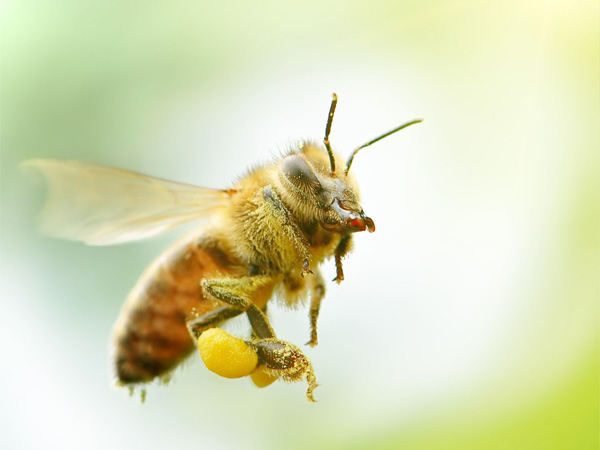
The recently swarmed colony that I housed in a hive has been on my mind, so I decided to check on it. I observed that worker bees were already collecting pollen, filling their “pollen baskets”—the specialized structures on their hind legs—with granular pollen and returning to the hive. I saw several bees entering through the hive entrance, confirming that they are actively functioning. Next, I inspected the original hive where the swarm had occurred. I found a large queen cell left on the frame, its cap neatly cut, indicating that a new queen had emerged from it. Although I tried to locate the new queen, she was difficult to find. Not wanting to disturb the colony further, I gently closed the hive and left it as is.
The swarming colony, which constitutes about half of the total population, takes half of the stored honey and fills its “honey stomach” before leaving the hive, making the original hive appear rather empty. However, since it is the nectar flow season, the bees are continuously bringing in nectar. The new queen will begin laying eggs after mating, so it probably won’t take long to recover and return to its original state. As I mentioned before, mating takes place around 20 to 30 meters above the ground, where male bees from various colonies gather and wait for the queen to arrive.
After the queen bee completes mating and returns to the hive, she focuses solely on egg-laying, producing around 2,000 eggs per day, which is roughly equivalent to her own body weight. However, there is always a risk that she could be eaten by birds or meet an unfortunate fate during mating, so she must return to the hive safely in order to be considered fully mature. Fortunately, she typically returns without incident, so there is no cause for concern. In any case, this time of year is busy for the bees, as there is an abundance of nectar, and they are focused on increasing the colony’s population.
ظلّت المستعمرة الجديدة، التي آويتها في خلية بعد انقسام السرب مؤخرًا، تشغل ذهني، فقررت تفقدها. لاحظت أن العاملات قد بدأن بالفعل بجمع حبوب اللقاح، وملء “سلال اللقاح” — وهي البُنى المتخصصة على أرجلها الخلفية — بحبوب لقاح دقيقة وملونة، وهنّ يعدن بها إلى الخلية. رأيت العديد منهن يدخلن عبر مدخل الخلية، مما يؤكد أن النشاط يسير على نحوٍ طبيعي. بعد ذلك، تفقدت الخلية الأصلية التي حدث فيها الانقسام. وجدت خلية ملكة كبيرة على الإطار، وقد فُتح غطاؤها بعناية، مما يدل على أن ملكة جديدة قد خرجت منها. حاولت العثور على الملكة الجديدة، لكنها كانت صعبة التمييز. ولألا أزعج المستعمرة أكثر، أغلقت الخلية برفق وتركتها على حالها.
عند مغادرة السرب، الذي يُشكّل نحو نصف عدد النحل في المستعمرة، يحمل النحل معه نصف ما تم تخزينه من العسل في “معدة العسل” الخاصة به، فتبدو الخلية الأصلية شبه فارغة. لكن بما أن موسم تدفق الرحيق قد بدأ، فإن العاملات لا يتوقفن عن جلب الرحيق باستمرار. وما إن تتزاوج الملكة الجديدة، حتى تبدأ بوضع البيوض، لذا من المرجح أن الخلية ستتعافى بسرعة وتستعيد نشاطها السابق.
كما ذكرت سابقًا، تتم عملية التزاوج على ارتفاع يتراوح بين 20 و30 مترًا فوق الأرض، حيث يجتمع الذكور من مستعمرات مختلفة في الهواء منتظرين وصول الملكة. بعد أن تُكمل الملكة رحلتها وتعود إلى الخلية، تكرّس حياتها لوضع البيوض فقط — إذ تنتج نحو ألفي بيضة يوميًا، أي ما يعادل تقريبًا وزن جسدها. ومع ذلك، يبقى هناك خطر أن تلتهمها الطيور أو تتعرض لمكروه أثناء الطيران، لذا لا تُعتبر ملكة ناضجة تمامًا إلا بعد عودتها بسلام إلى الخلية. ولحسن الحظ، فإنها غالبًا ما تعود دون أي حادث، فلا داعي للقلق.
على أي حال، يُعتبر هذا الوقت من العام موسمًا مزدحمًا للنحل، حيث يفيض الرحيق في الطبيعة، ويتركز كل جهدهم على بناء القوة وزيادة عدد المستعمرة.