
As the year draws to a close, I can’t help but feel how quickly time passes while writing this blog. Each day, we dedicate ourselves to producing genuine, functional honey that can truly benefit our customers’ health. From the bottom of my heart, I wish you all a wonderful New Year.
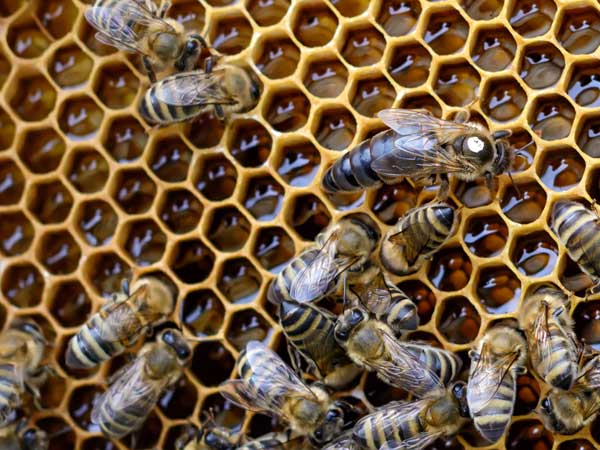
Here in New Zealand’s North Island, the arrival of northerly winds and warm air masses from the South Pacific has brought sudden summer-like weather. The bees, benefiting from an abundance of nectar sources, are now at their most active, with colony sizes nearing their peak at an estimated 50,000 to 60,000 bees per hive. Inside the hives, overcrowding is becoming an issue, raising the risk of swarming. If left unchecked, swarming could result in half the colony departing with their honey stores, which would be a significant loss for beekeepers.
To prevent this, large brood cells known as queen cells, which are used to raise new queens, must be removed as soon as they are found. Additionally, extra hive boxes must be added to ensure there is enough space. Each hive box contains ten frames, and it is essential to inspect each one carefully to check for the presence of queen cells.
Queen cells are several times larger than ordinary cells, making them relatively easy to find. However, with tens of thousands of bees covering each frame, the task is far from simple. To inspect a frame, it must be gently removed and then shaken vigorously up and down to dislodge the bees back into the hive. Once the bees have cleared, queen cells become visible. Swarming season often coincides with the nectar flow, a period of high bee activity, making this task all the more challenging due to the huge number of bees present.
Each frame must be carefully inspected to ensure no queen cells are missed. Even a single overlooked queen cell can lead to the emergence of a new queen within approximately two weeks. The worker bees feed the larva royal jelly, rapidly raising it to queen status. Queen cells are not limited to just one per colony; the bees often create multiple cells. This is likely to ensure the certainty of a queen’s successful emergence. (To be continued)
مع اقتراب نهاية العام، يراودني شعورٌ عميق بمدى سرعة انقضاء الوقت كلما شرعت في كتابة هذه السطور. فنحن نكرّس أيامنا لإنتاج عسلٍ حقيقي بخصائص وظيفية عالية، قادر على الإسهام فعليًا في صحة عملائنا. ومن قلبي، أتمنى لكم عامًا جديدًا مليئًا بالخير والطمأنينة.
هنا في الجزيرة الشمالية من نيوزيلندا، أدّى اندفاع الرياح الشمالية وكتل الهواء الدافئة القادمة من جنوب المحيط الهادئ إلى ظهور طقس صيفي مفاجئ. وقد ازدهرت أسراب النحل بفضل وفرة مصادر الرحيق، وبلغ نشاطها ذروته، حيث يقترب عدد أفراد الخلية الواحدة من خمسين إلى ستين ألف نحلة. وداخل الخلايا، بدأت علامات الازدحام بالظهور، مما يرفع من احتمالية حدوث التطريد. وإذا وقع التطريد من دون تدخّل، فقد تغادر نصفُ المستعمرة حاملةً معها مخزون العسل — وهو خسارة كبيرة لأي مربّي نحل.
ولمنع ذلك، يجب إزالة بيوت الملكات — وهي خلايا كبيرة تُربّى فيها الملكات الجديدة — فور العثور عليها. كما ينبغي إضافة صناديق جديدة إلى الخلية لتوفير مساحة كافية. يحتوي كل صندوق على عشرة إطارات، ويجب فحص كل إطار بعناية للتأكد من خلوّه من بيوت الملكات.
تتميّز بيوت الملكات بحجمها الأكبر مقارنة بالخلايا العادية، مما يجعل التعرف عليها سهلًا نسبيًا. إلا أن عشرات الآلاف من النحل الذي يغطي كل إطار يجعل المهمة معقّدة. ولإجراء الفحص، يجب سحب الإطار برفق ثم هزّه بقوة صعودًا وهبوطًا لإسقاط النحل داخل الخلية. بعد أن تتنحّى النحل بعيدًا، تصبح بيوت الملكات واضحة للعين.
يأتي موسم التطريد غالبًا متزامنًا مع فترة جريان الرحيق، حين يكون النحل في أقصى درجات النشاط، مما يجعل المهمة أكثر صعوبة بسبب العدد الهائل للنحل. ولهذا السبب، ينبغي فحص كل إطار بدقة متناهية لضمان عدم إغفال أي بيت ملكي واحد. إذ إن بيتًا واحدًا قد يكفي لظهور ملكة جديدة خلال أسبوعين تقريبًا. فاليرقات، عندما تُغذّى بغذاء الملكات، تنمو بسرعة لتصبح ملكات. ولا تكتفي المستعمرة ببيت ملكي واحد، بل تنشئ عادة عدة بيوت، ضمانًا لنجاح عملية إنتاج ملكة جديدة.
(يتبع…)