
(Continuing from the previous blog) In this regard, Japan, with 70% of its land covered by natural forests, boasts a rare and remarkable natural beauty, as I’ve previously discussed in this blog. In recent years, the New Zealand government has also tightened regulations and strengthened the protection of native forests. My own beekeeping operation falls under government management, and while it’s my land, any forest clearing is subject to strict government oversight.
Much of New Zealand’s land being converted to pastures through the work of honeybees. During the settlement era, British pioneers found it easiest to clear the virgin forests, sow seeds for grass brought from their homeland, and establish pastures for livestock. This approach allowed them to quickly secure essentials like food, clothing, and shelter. Raising sheep provided wool, meat, and even timber from felled trees to meet their basic needs. I personally keep sheep at home as a substitute for a lawn mower, and I believe there’s no other animal as low-maintenance—but that is only if there’s pasture available, of course.
New Zealand, once submerged under the ocean in ancient times, emerged later as an island where all original plant and animal life had been wiped out. As a result, only birds could make their way to the island, and naturally, there were no pollinating insects. British settlers initially had to bring grass seeds from the UK each year—a laborious process of sowing to establish pastures.
However, on the recommendation of Darwin, famous for his theory of evolution, they introduced honeybees, which solved this problem. This marked the beginning of beekeeping in New Zealand. Today, Manuka honey is gaining worldwide recognition, but it’s thanks to the pollination work of honeybees that agriculture—including livestock farming and fruit production—has been able to thrive in this country.
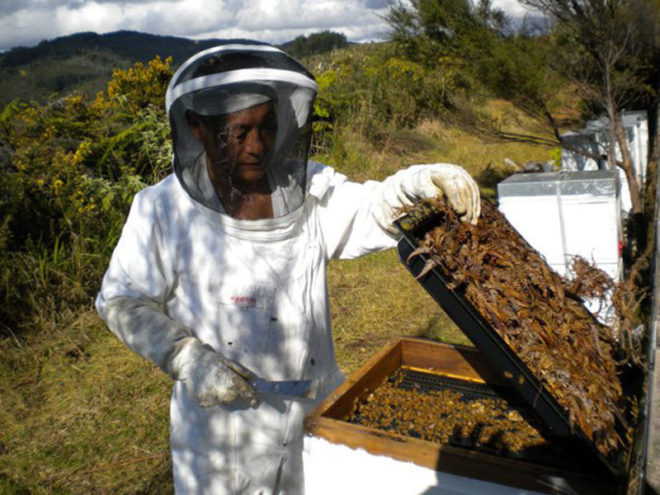
According to an elderly local beekeeper, “Nowadays, Manuka honey is treated as a precious variety, but when I was young, my parents always told us to pull out any Manuka trees as soon as we saw them.” If left unchecked, the Manuka trees would spread and overtake the pastures. Back in the day, hive frames were all made of wood, but as Manuka honey became profitable, resin frames started to appear.
This honey is extracted using a centrifugal separator, but due to the high viscosity of Manuka honey compared to other types, the extractor needs to spin at high speeds to pull the honey out. Wooden frames, with their foundation secured by only three wires, suffer from the strong centrifugal force, which damages the wax cells. After extraction, the damaged frames can’t be reused as empty comb (karasuhi), which refers to honeycomb without any stored honey, pollen, pupae, larvae, or eggs.
Still, wooden frames align more naturally with the ecosystem, so I try to use them as much as possible. In the lower sections, where bees lay eggs and care for young, I use wooden frames. For storage on higher levels (the third story and above), only resin frames are suitable, as they can withstand the force required to extract the thick Manuka honey. Based on the faster rate at which comb develops in these frames, it’s clear that the bees prefer wooden frames.
استكمالًا للحديث في المدوّنة السابقة، فإن اليابان، التي تغطي الغابات الطبيعية ما نسبته 70% من مساحتها، تُعد من الدول القليلة التي تمتلك جمالًا طبيعيًا نادرًا واستثنائيًا، وقد تحدّثتُ عن ذلك مسبقًا. وفي السنوات الأخيرة، شدّدت الحكومة النيوزيلندية قوانينها وعزّزت إجراءات حماية الغابات الأصلية. حتى أن نشاطي في تربية النحل يخضع لإدارة حكومية دقيقة؛ فبرغم أن الأرض ملكي، إلا أن أي عملية لإزالة الأشجار لا بد أن تمر عبر رقابة صارمة من الجهات المختصة.
وقد تحوّلت مساحات واسعة من نيوزيلندا إلى مراعٍ بفعل الدور الحيوي الذي تقوم به النحل. ففي زمن الاستيطان، وجد الروّاد البريطانيون أن أسهل طريقة لتعمير الأرض هي قطع الغابات البِكر، ونثر بذور الأعشاب التي جلبوها من موطنهم، ثم إنشاء مراعٍ للماشية. بهذه الطريقة استطاعوا تأمين أساسيات الحياة من غذاء وكساء ومأوى بسرعة وكفاءة. فتربية الأغنام كانت توفر الصوف واللحم، كما أن الأشجار المقطوعة توفر لهم الأخشاب. أما بالنسبة لي، فأنا أربي مجموعة من الأغنام حول المنزل كبديل لجزازة العشب، ولا أظن أن هناك حيوانًا أقل عناءً في رعايته—لكن بشرط توفّر المراعي طبعًا.
لطالما كانت نيوزيلندا مغمورةً بالمياه في العصور القديمة، ثم ارتفعت لاحقًا لتصبح جزيرة خالية من أي حياة نباتية أو حيوانية أصلية. ولهذا السبب، لم تكن فيها حشرات مخصِّبة. كان المستوطنون البريطانيون يضطرون إلى جلب بذور الأعشاب من المملكة المتحدة كل عام لإعادة بذر المراعي.
وبناءً على توصية داروين—صاحب نظرية التطور الشهيرة—تم إدخال نحل العسل إلى نيوزيلندا، وهو ما غيّر كل شيء. ومن هنا بدأت تربية النحل في البلاد. واليوم يحظى عسل المانوكا باهتمام عالمي واسع، غير أن ازدهار الزراعة وتربية المواشي وإنتاج الفاكهة في نيوزيلندا يعود الفضل فيه أساسًا إلى الدور الإعجازي للنحل في التلقيح.
وقد حدثني أحد المربين المخضرمين قائلًا: “عسل المانوكا أصبح اليوم كنزًا ثمينًا، لكن عندما كنت طفلًا، كان والدَي يأمراننا باقتلاع شجيرات المانوكا فور رؤيتها، لأنها تنتشر بسرعة وتزاحم المراعي.” وبالفعل، لو تُركت دون إدارة، فإن أشجار المانوكا تهيمن على المراعي. في الماضي، كانت جميع إطارات الخلايا تُصنع من الخشب، لكن مع تحقيق عسل المانوكا أرباحًا كبيرة، ظهرت الإطارات المصنوعة من الراتنج.
ويتم استخراج العسل بواسطة جهاز الطرد المركزي. ونظرًا للزوجة العالية لعسل المانوكا مقارنة بغيره من الأنواع، يحتاج الجهاز إلى سرعة دوران كبيرة لسحب العسل. إلا أن الإطارات الخشبية، التي تُشدّ بثلاثة أسلاك فقط، لا تتحمل قوة الطرد العالية، مما يتسبب في تلف العيون الشمعية. ولذلك لا يمكن إعادة استخدامها كـ “قرص فارغ” بعد الاستخراج، أي كخلية خالية من العسل وحبوب اللقاح واليرقات والبيض.
ومع ذلك، تبقى الإطارات الخشبية أكثر انسجامًا مع الطبيعة، ولهذا أفضّل استخدامها قدر الإمكان. فأنا أعتمد عليها في الطبقات السفلية حيث تضع الملكة البيض وتُربّى اليرقات. أما الطبقات العليا—ابتداءً من الطابق الثالث فما فوق—فلا يصلح لها إلا الإطارات الراتنجية، لأنها وحدها القادرة على تحمل قوة الطرد اللازمة لاستخراج عسل المانوكا السميك. ومن خلال سرعته في بناء الأقراص، يبدو واضحًا أن النحل نفسه يفضّل الإطارات الخشبية.