
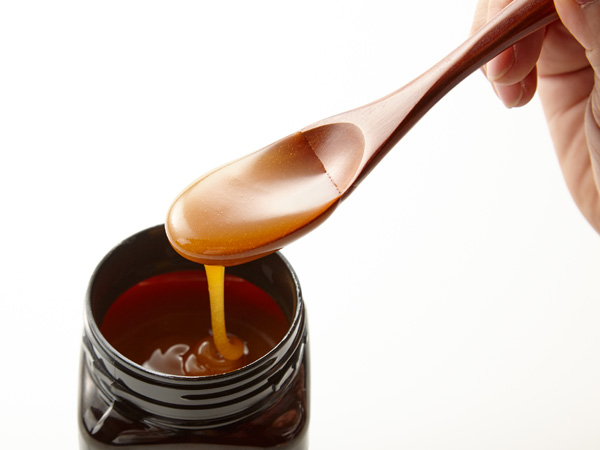
(Continuing from the previous blog) When it goes this far, this is no longer honey. True raw honey contains many enzymes and is rich in impurities. It also includes a significant amount of pollen collected from a variety of flowers during foraging, which adds the essence of multiple blooms. These elements are rich in various amino acids, which are crucial for the human body since proteins are composed of amino acid chains. Additionally, raw honey is abundant in minerals. In my apiary, even after the frames are fully capped, I continue to manage them by leaving them with the bees for a while.
This is because I expect the activity of methylglyoxal (MGO), a unique component of Manuka honey, to enhance under the conditions within the hive. While I can’t go into further detail as it is trade secrets, it’s important to note that MGO does not originally exist in Manuka nectar; it is a derivative of its precursor, dihydroxyacetone. Therefore, our honey is fundamentally different from the supermarket varieties. When I began production here 23 years ago (in 1995), a time when the name Manuka honey was virtually unknown in Japan, many customers who only knew supermarket honey tasted our products and likely wondered, ‘What on earth have I been eating until now?’ In fact, I received such feedback quite frequently back then.
(استمرارًا للمدونة السابقة) عندما يصل العسل إلى هذه المرحلة، فإنه لم يعد مجرد عسل. العسل الخام الحقيقي يحتوي على العديد من الإنزيمات وغني بالشوائب الطبيعية. كما يحتوي على كمية كبيرة من حبوب اللقاح التي تم جمعها من مجموعة متنوعة من الأزهار أثناء الرعي، مما يضيف جوهر أزهار متعددة. هذه العناصر غنية بالأحماض الأمينية المتنوعة، وهي ضرورية لجسم الإنسان، حيث تتكون البروتينات من سلاسل الأحماض الأمينية. بالإضافة إلى ذلك، العسل الخام غني بالمعادن. في مرباي، حتى بعد أن تُغلق الإطارات بالكامل بالشمع، أواصل إدارتها بتركها مع النحل لفترة من الوقت.
وذلك لأنني أتوقع زيادة نشاط ميثيلغلايوكسال (MGO)، المكون الفريد لعسل المانوكا، في ظل ظروف الخلية. رغم أنني لا أستطيع الخوض في التفاصيل لكونها أسرار تجارية، من المهم ملاحظة أن الـ MGO لا يوجد أصلاً في رحيق المانوكا؛ فهو مشتق من مركب سابق له، ثنائي هيدروكسي أسيتون. لذلك، يختلف عسلنا جوهريًا عن الأنواع الموجودة في الأسواق. عندما بدأت الإنتاج هنا منذ 23 عامًا (في عام 1995)، في وقت كان فيه اسم عسل المانوكا شبه مجهول في اليابان، كان العديد من العملاء الذين اعتادوا على عسل السوبرماركت عند تذوق منتجاتنا يتساءلون على الأرجح: “ما الذي كنت أتناوله طوال هذا الوقت؟” في الواقع، كنت أتلقى مثل هذه التعليقات بشكل متكرر آنذاك.