
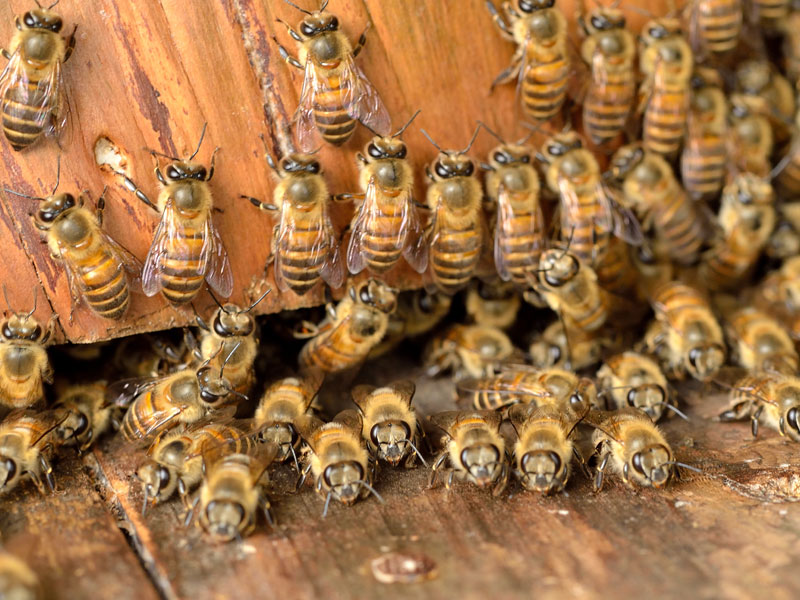
As winter truly begins, each day becomes cold and rainy. This weather is particularly challenging for the bees in New Zealand. They, being a female-dominated group, are especially sensitive to humidity and drops in temperature. They cannot even go outside to gather nectar and pollen. However, the rainy season here differs somewhat from Japan’s rainy season. Instead of constant, all-day rain, it often alternates between rain and clear skies every hour. When it starts raining, it can pour heavily, accompanied by strong winds, but once the rain clouds pass, the sun shines as if nothing had happened, creating this cycle.
When the rain stops, the bees fly out of the hive, and as it begins to rain again, they return to the hive. Some manage to come back with their legs packed full of pollen in a remarkably short time. It’s truly impressive to see how they find flowers in such weather. In this way, they gather nectar and pollen whenever the opportunity arises. Since their work is so quick, there must be nearby flowers, likely wildflowers. At this time of year, food sources are scarce, leading the queen bee to reduce her egg-laying. If there isn’t enough food, increasing the population wouldn’t be sustainable. However, this doesn’t mean she stops laying eggs entirely; it’s crucial to nurture the next generation that will be active come spring. Maintaining a temperature of about 35°C is essential for the development of the young bees.
The bees obtain energy by consuming stored honey, and they also vibrate their wings in a way that isn’t for flying but rather to activate their muscles and generate heat. While stored honey is essential as food, it also plays a crucial role in creating a nurturing environment for raising their young. This energy source allows them to convert glucose from the honey into heat. In Japan, there is a native species known as the Japanese honeybee.
Although they are not present in this region, Japanese honeybees can generate heat up to 40°C. This ability is crucial for their defense against predators like hornets. When a hornet invades their hive, Japanese honeybees will swarm around it, using their collective body heat to raise the temperature and effectively kill the intruder. In contrast, Western honeybees do not have the same capacity to generate such high temperatures. Their primary functions for heat generation include evaporating the moisture from the collected nectar and providing warmth for raising their young.
مع بداية الشتاء الحقيقي، تصبح الأيام باردة وممطرة على نحوٍ متواصل، وهو طقسٌ قاسٍ على نحل العسل في نيوزيلندا. فهذه الكائنات الأنثوية الحسّاسة بطبيعتها، تتأثر كثيرًا بالرطوبة وانخفاض الحرارة، ولا تستطيع الخروج لجمع الرحيق أو حبوب اللقاح. لكن موسم الأمطار هنا يختلف عن موسمها في اليابان. فبدلًا من المطر المستمر طوال اليوم، تتناوب السماء بين المطر والصفاء كل ساعة تقريبًا. حين تهطل الأمطار، تكون غزيرة مصحوبة برياحٍ قوية، لكن ما إن تمرّ الغيوم حتى تعود الشمس لتشرق كأن شيئًا لم يحدث.
ما إن يتوقف المطر، حتى تنطلق النحلات خارج الخلية، وعندما يعود الهطول، يسرعن إلى الداخل من جديد. ومن المدهش أن بعضهن يعدن في وقتٍ قصير وأرجلهن محمّلة بحبوب اللقاح، وكأنهن يعرفن تمامًا أين تختبئ الأزهار رغم الطقس المتقلّب. هكذا تستغل النحلات كل لحظة صفاءٍ لجمع الرحيق وحبوب اللقاح، وربما تأتي هذه الأزهار من نباتاتٍ برية قريبة لا تتأثر بالفصول.
في هذا الوقت من السنة، تقلّ مصادر الغذاء، فتخفّض الملكة وتيرة وضع البيض حفاظًا على توازن المستعمرة. فكثرة النسل دون غذاءٍ كافٍ تعني الفناء، ومع ذلك لا تتوقف الملكة تمامًا، إذ لا بد من إعداد الجيل الذي سيحمل الحياة من جديد مع قدوم الربيع. ولنمو اليرقات، من الضروري الحفاظ على حرارةٍ تقارب ٣٥ درجة مئوية داخل الخلية.
تستمدّ النحلات طاقتهن من العسل المخزَّن، ويحرّكن أجنحتهن بطريقة لا تهدف للطيران، بل لتوليد الدفء عبر الاهتزاز. فالعسل لا يُعد طعامًا فحسب، بل مصدرًا للطاقة التي تبعث الحياة في الخلية. من خلال الجلوكوز الموجود فيه، يحوّلن الغذاء إلى حرارةٍ تحفظ الأمل. وفي اليابان، يوجد نوعٌ أصيل من النحل يُعرف بـ«نحل اليابان». رغم غيابه عن هذه المنطقة، إلا أنه يمتلك قدرةً مذهلة على رفع حرارة جسده حتى ٤٠ درجة مئوية، وهي قدرةٌ يستخدمها للدفاع ضد أعدائه، خصوصًا الدبابير المفترسة. فعندما تهاجم دَبْرَة خلية النحل الياباني، تحيطها العاملات وتستخدم حرارتهن الجماعية لقتلها في لحظاتٍ معدودة.
أما نحل العسل الغربي، فلا يملك هذه القوة الحرارية نفسها، ويقتصر دوره في توليد الحرارة على تبخير الرحيق وتدفئة الأجيال الناشئة. لكن في كلتا الحالتين، يظلّ هذا العالم الصغير مرآةً لانسجامٍ عظيم بين العمل والغريزة، بين الحياة والمطر، بين البرد والعسل.