
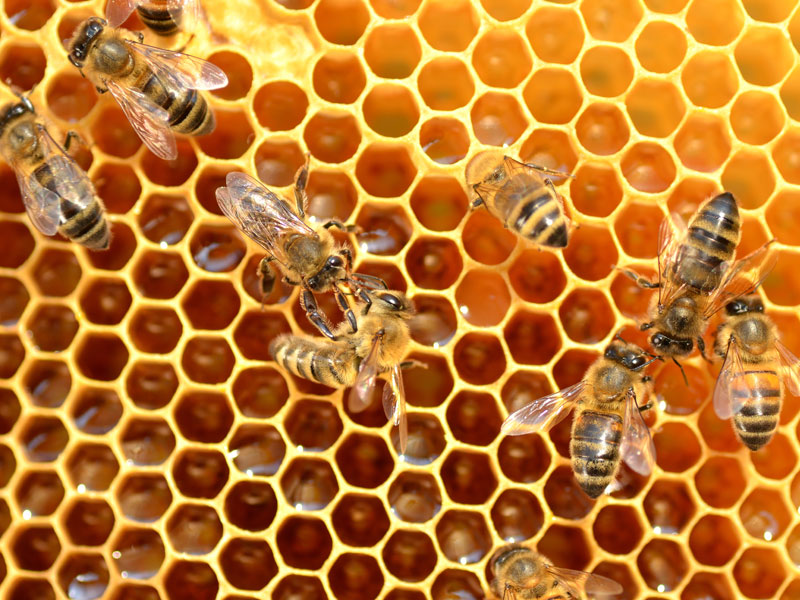
Last time, we discussed fermented foods and related topics. Honey with a sugar content of 80% remains unchanged almost indefinitely, but if even a small amount of moisture is added, it begins to ferment due to microorganisms. The reason bees store honey is that it is essential for their survival as food during the winter months when nectar is no longer available. In the absence of nectar during winter, honeybees rely on their stored honey as an energy source. However, if the sugar concentration in the stored honey is too low, it can ferment as mentioned earlier.
Yeast and other microorganisms feed on the honey, causing fermentation, which depletes the honey’s sugar content and renders it unusable as food for the bees. When honey is freshly harvested, it contains high moisture content, making it unsuitable for long-term storage. To preserve it, bees use their body heat and fanning wings to reduce the moisture content, increasing the sugar concentration to over 80%. Once this level is reached, they seal the honey with a wax cap secreted from their thoracic glands. Bees instinctively know that at this sugar concentration, the honey can be stored without spoilage. There’s even a story that honey discovered in a temple from ancient Roman times was found to be almost unchanged, which speaks to honey’s remarkable preservative properties.
The nectar collected by bees during the honey flow season is enzymatically processed by worker bees inside the hive. Enzymes secreted from their salivary glands break down disaccharides into glucose and fructose, resulting in monosaccharides. Monosaccharides can be absorbed directly by the body, whereas disaccharides must first be broken down into monosaccharides before absorption. This process requires a significant amount of calcium, energy, and vitamin B1. According to one theory, the amount of calcium required to break down a single sugar cube used in coffee is equivalent to the calcium found in more than 10 bottles of milk.
Sugar takes time to break down, and once it is, it can be absorbed without limit. In contrast, honey is rapidly absorbed initially, but once a certain amount is taken into the bloodstream, further absorption stops. This is why glucose drips are commonly administered in hospitals directly into the bloodstream—since glucose is a monosaccharide, it can be immediately used as energy, unlike sugar, which tends to accumulate in the body. As a result, honey is beneficial for quick recovery from fatigue, as it provides a rapid energy boost without the same risk of overaccumulation as sugar.
We frequently receive inquiries about diabetes from our customers. While honey does contain sugars and can have an impact, it is not the same as regular sugar. Under a doctor’s guidance, even diabetic patients may be able to use honey. In New Zealand, honey is also commonly used as a sugar substitute in women’s diets, contributing to healthier alternatives for managing weight.
لقد تحدثنا في المرة السابقة عن الأطعمة المخمّرة وما يرتبط بها. يُعد العسل الذي يحتوي على نسبة سكر تبلغ ٨٠٪ مادةً مستقرة لا تتغير تقريبًا مع مرور الزمن، لكن إضافة قدرٍ ضئيلٍ من الرطوبة كافٍ لبدء عملية التخمّر بفعل الكائنات الدقيقة.
النحل يدّخر هذا العسل لأنه مصدر الحياة في فصل الشتاء، حين تختفي الأزهار ويتوقف الرحيق عن الجريان. ففي تلك الفترة القاسية، يعتمد النحل على ما خزّنه من عسل كمصدرٍ للطاقة، لكن إذا كانت نسبة السكر منخفضة، يبدأ العسل بالتخمّر، فتستهلك الخمائر محتواه من السكر، فيفقد قيمته كمصدرٍ غذائي ويصبح غير صالحٍ للبقاء.
عند جني العسل حديثًا، يكون محتواه من الرطوبة مرتفعًا، مما يجعله غير مناسبٍ للتخزين الطويل. ولذلك يعمل النحل بذكاءٍ مدهش على تقليل هذه الرطوبة باستخدام حرارة أجسادهم وحركة أجنحتهم المستمرة، حتى ترتفع نسبة السكر إلى أكثر من ٨٠٪. وعند بلوغ هذه المرحلة، يُغلق النحل العسل بطبقةٍ من الشمع تفرزها غدده الصدرية، وكأنه يختم كنزًا خالدًا.
وقد رُوي أن عسلًا اكتُشف في أحد المعابد الرومانية القديمة بقي على حاله تقريبًا بعد آلاف السنين، وهو دليلٌ ساطع على القوة الحافظة التي أودعتها الطبيعة في هذا الإكسير الذهبي. في موسم التدفق، يقوم النحل العامل داخل الخلية بمعالجة الرحيق إنزيميًا؛ فتقوم الإنزيمات المفرزة من غددها اللعابية بتفكيك السكريات الثنائية إلى الجلوكوز والفركتوز، وهما سكريان أحاديان يسهل امتصاصهما مباشرة في الجسم. بينما يتطلب امتصاص السكريات الثنائية طاقةً وكالسيوم وفيتامين B1 لتفكيكها أولًا، حتى قيل إن تفكيك مكعب سكرٍ واحد يحتاج إلى كمية كالسيوم تعادل ما في عشرة زجاجات من الحليب!
إن امتصاص السكر يستغرق وقتًا طويلًا ويستمر دون حدود، بينما يُمتص العسل بسرعةٍ مذهلة، ثم يتوقف الامتصاص عند حدٍّ آمنٍ طبيعي. ولهذا السبب يُستخدم الجلوكوز في المستشفيات كحقنٍ مباشرٍ للطاقة، فهو سكرٌ أحادي يمكن للجسم استهلاكه فورًا، في حين أن السكر العادي يتراكم بسهولة داخل الخلايا.
لهذا، يُعتبر العسل مصدرًا مثاليًا للطاقة الفورية والتعافي من الإجهاد، دون المخاطر التي ترافق تراكم السكريات الصناعية. كثيرًا ما نتلقى استفساراتٍ من عملائنا حول مرض السكري. ورغم أن العسل يحتوي على سكريات، إلا أنه يختلف جوهريًا عن السكر الأبيض. وبتوجيهٍ من الأطباء، يمكن حتى لمرضى السكري استخدامه باعتدال. وفي نيوزيلندا، تعتمد العديد من النساء على العسل كبديلٍ طبيعيٍ للسكر في نظامٍ غذائي صحي يوازن بين الجمال والعافية.