
(Continuing from last blog) When honeybees come into contact with this pesticide, its components stick to their bodies and are carried throughout the hive. This must typically be removed within 3 to 5 weeks because mites have a tendency to develop resistance to the pesticide. To prevent this resistance from forming, we must use different pesticides with varying mechanisms of action in a flexible and rotating manner. However, since the mites’ survival is at stake, achieving complete eradication is extremely difficult.
Moreover, various viral diseases transmitted by these pests can sometimes spread within the hive, so caution is always necessary. This mite did not originally exist in New Zealand, but it has invaded over the past 10 years, and its route of entry remains unknown. It is said to have started with the Asian honeybee and spread to the European honeybee through Siberia, but the details are still unclear.
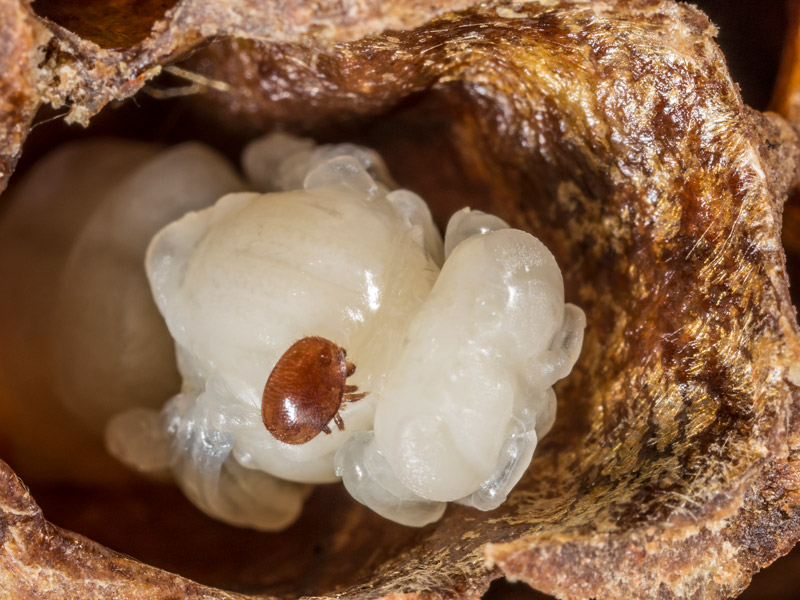
This mite initially parasitizes adult bees, feeding on their body fluids. However, it eventually detaches from the adult bees and attaches to the larvae inside the hive, where it begins laying eggs and reproducing. It tends to especially target drone larvae. Inside the brood cells, the mites mate, and the male mites die, similar to male honeybees. After developing inside the brood cells, the newly matured mites attach themselves to adult bees, emerging with them and continuing to feed on their body fluids. Once they are capable of laying eggs, they detach and invade the brood cells of honeybee larvae, continuing this life cycle.
Therefore, this parasite spends its entire life within the hive, with a female’s lifespan being around two months. Meanwhile, the honeybees, whose body fluids have been drained, suffer from poor development and are susceptible to various mite-borne infections, making this parasite a natural enemy of honeybees and a constant challenge for beekeepers every season.
(تتمّة للمدوّنة السابقة)
عندما تتلامس النحلات مع هذه المبيدات، تلتصق مكوّناتها بأجسامها وتنتقل إلى داخل الخلية بأكملها. عادةً يجب إزالة هذه المواد خلال فترة تتراوح بين ثلاثة إلى خمسة أسابيع، لأن هذا العثّ يميل إلى تطوير مقاومة للمبيد مع مرور الوقت. ولمنع تشكّل هذه المقاومة، يجب استخدام أنواع مختلفة من المبيدات بآليات عمل متنوّعة وبأسلوب متناوب ومرن. ومع ذلك، وبما أن بقاء هذا الطفيل على المحك، فإن القضاء التام عليه أمر في غاية الصعوبة.
إضافةً إلى ذلك، يمكن أن تنتشر داخل الخلية أمراض فيروسية متعدّدة ينقلها هذا العثّ، مما يستدعي الحذر الدائم. لم يكن هذا العثّ موجودًا أصلاً في نيوزيلندا، لكنه غزاها خلال السنوات العشر الماضية، ولا يزال طريق دخوله غير معروف. ويُقال إنه بدأ مع نحل العسل الآسيوي، ثم انتقل إلى نحل العسل الأوروبي عبر سيبيريا، غير أن التفاصيل الدقيقة تبقى غامضة.
يبدأ هذا العثّ حياته بالتطفّل على النحل البالغ، متغذّياً على سوائل جسده. لكنه سرعان ما ينفصل عنه ويلتصق بيرقات النحل داخل الخلية، حيث يبدأ بوضع البيوض والتكاثر. ويميل إلى استهداف يرقات الذكور بشكل خاص. داخل خلايا الحضنة، يتزاوج العثّ، ويموت الذكر بعد ذلك، تمامًا كما يحدث مع ذكور النحل. وبعد أن تنمو اليرقات داخل تلك الخلايا، تخرج إناث العثّ الناضجة مع النحل البالغ، وتستمر بالتغذّي على سوائل جسده. وحين تصبح قادرة على وضع البيض، تنفصل لتغزو خلايا يرقات جديدة، وتُعيد دورة حياتها.
وهكذا، يعيش هذا الطفيل كامل حياته داخل الخلية، حيث يبلغ عمر الأنثى حوالي شهرين. وفي المقابل، تعاني النحلات التي استُنزفت سوائل أجسامها من ضعف في النمو وتصبح عرضة لمختلف الأمراض التي ينقلها العثّ. إنه عدوّ طبيعي للنحل، وتحدٍّ متكرّر يواجهه مربّو النحل كل موسم — تذكير دائم بأن التوازن بين الإنسان والطبيعة لا يتحقق إلا من خلال الفهم العميق والاحترام المتبادل لكل أشكال الحياة.