
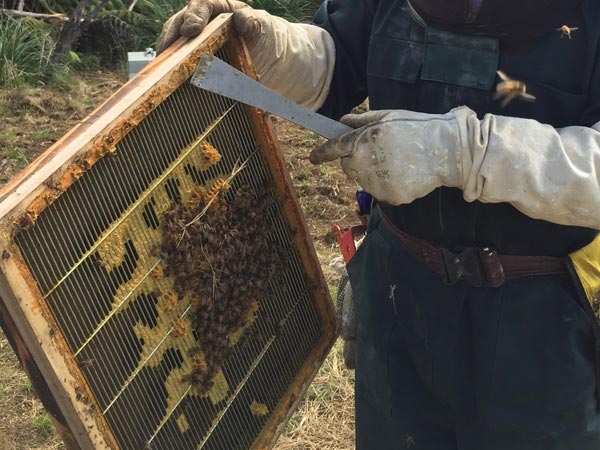
Today, I’d like to talk a little about propolis. Propolis is a substance that honeybees bring into the hive, made from plant resins. Its plant origins are diverse, and there is no single specific source. Honeybees instinctively recognize the vitality of trees and bring these resins back to the hive. The hive itself is a densely packed living space, measuring less than 50 centimeters in both width and length. During the nectar flow season, over 50,000 bees, led by the queen, live together in this confined area. In such overcrowded conditions, the outbreak of a disease could lead to rapid infection and the complete collapse of the colony. However, such events rarely occur unless under extraordinary circumstances.
The bees live peacefully, each carrying out their individual missions. This harmonious coexistence is thought to be supported by the active properties of propolis. The resin brought back to the hive is applied to various locations inside, with large amounts concentrated near the hive entrance. In older, long-unused hives, the bees accumulate propolis at the entrance, creating a narrow tunnel just wide enough for a single bee to pass through. Foraging bees returning from outside must pass through this tunnel, during which their bodies come into contact with the propolis. It is believed that this contact helps disinfect them. In addition, if a predator larger than a bee enters the hive, the bees collectively attack it with their stingers and successfully eliminate the intruder.
However, if the carcass of an intruder cannot be removed from the hive, it would eventually begin to decompose. To prevent this, the bees coat the body with large amounts of propolis, halting the decomposition process and mummifying it. Inside the hive, propolis is found everywhere, particularly in crevices, effectively sealing off the interior from the external environment. By coating the interior with propolis, it is believed that bees inhibit the growth of harmful bacteria. A study analyzing the DNA of bees found in amber estimated to be 40 million years old revealed that their DNA is almost identical to that of modern bees. This indicates that bees have not undergone significant evolutionary changes since ancient times. While most plants and animals have evolved by altering their DNA sequences to adapt to environmental changes, bees have not needed to make such adaptations.
Over an unimaginably long period, honeybees have repeatedly overcome numerous challenges, surviving virtually unchanged for over 40 million years. This is thought to indicate that the interior of their hive, protected by substances like propolis, has been safeguarded from external threats, removing the need to adapt or evolve their proteins (DNA) to changing circumstances. This theory suggests that honeybees are exceptionally unique creatures, so it may be natural that their ways remain beyond the full comprehension of human wisdom.
اليوم، أودّ أن أتوقف قليلًا عند البروبوليس—تلك المادة الاستثنائية التي يجلبها نحل العسل إلى داخل الخلية، والمصنوعة من راتنجات نباتية متنوعة. إن أصول البروبوليس النباتية متعددة، ولا يمكن إرجاعها إلى مصدر واحد بعينه. فالنحل، بدافع غريزته الفطرية، يتعرّف على حيوية الأشجار وقوة حياتها، ثم يحمل تلك الراتنجات الثمينة عائدًا بها إلى الخلية.
الخلية نفسها فضاء معيشي شديد الاكتظاظ، لا يتجاوز طوله وعرضه خمسين سنتيمترًا. وخلال موسم تدفق الرحيق، تعيش داخل هذا الحيز المحدود أكثر من خمسين ألف نحلة، تقودها الملكة، في نظام بالغ الدقة والتناغم. وفي مثل هذه الظروف، قد يؤدي تفشّي أي مرض إلى عدوى سريعة وانهيار كامل للمستعمرة. ومع ذلك، فإن مثل هذه الكوارث نادرة الحدوث، ولا تقع إلا في ظروف استثنائية للغاية.
يعيش النحل في سلام، يؤدي كل فرد فيه مهمته الخاصة بانضباط مذهل. ويُعتقد أن هذا التعايش المتناغم تحميه الخصائص الفعّالة للبروبوليس. فالراتنج الذي يُعاد إلى الخلية يُطلى به العديد من المواضع الداخلية، وتتركّز كميات كبيرة منه عند مدخل الخلية تحديدًا.
وفي الخلايا القديمة التي لم تُستخدم لفترات طويلة، يقوم النحل بتجميع البروبوليس عند المدخل، مكوّنين نفقًا ضيقًا لا يسمح بالمرور إلا لنحلة واحدة. وعندما تعود النحلات السارحات من الخارج، لا بدّ لهن من المرور عبر هذا النفق، حيث تلامس أجسادهن البروبوليس. ويُعتقد أن هذا الاحتكاك يعمل كعملية تطهير طبيعية.
وإذا تسلل إلى الخلية كائن مفترس أكبر من النحلة، فإن النحل يهاجمه جماعيًا بلسعاته حتى يتم القضاء عليه. غير أنه في الحالات التي يتعذر فيها إخراج جثة الدخيل من الخلية، فإن تحللها قد يشكّل خطرًا جسيمًا. ولتفادي ذلك، يقوم النحل بتغليف الجثة بكميات كبيرة من البروبوليس، مما يوقف عملية التحلل ويحوّلها إلى ما يشبه التحنيط.
داخل الخلية، يوجد البروبوليس في كل مكان، ولا سيما في الشقوق والفجوات، حيث يعمل كحاجز يعزل الداخل عن العالم الخارجي. ومن خلال طلاء المساحات الداخلية بهذه المادة، يُعتقد أن النحل يحدّ من نمو البكتيريا الضارة ويحافظ على بيئة داخلية نقية ومستقرة.
وقد كشفت دراسة حلّلت الحمض النووي لنحل وُجد محفوظًا في الكهرمان ويُقدَّر عمره بنحو أربعين مليون عام، أن تركيبه الوراثي يكاد يكون مطابقًا لحمض النحل المعاصر. وهذا الاكتشاف يشير إلى أن النحل لم يطرأ عليه تطور جوهري منذ عصور سحيقة. ففي حين قامت معظم الكائنات الحية—نباتات وحيوانات—بتغيير تسلسلاتها الوراثية للتكيف مع التحولات البيئية، لم يكن النحل بحاجة إلى مثل هذه التعديلات.
وعلى مدى زمن لا يمكن للعقل البشري تصوره، واجه نحل العسل تحديات لا حصر لها، وتمكن من تجاوزها، محافظًا على بنيته الأساسية لما يزيد على أربعين مليون سنة. ويُعتقد أن هذا الثبات يعود إلى أن البيئة الداخلية للخلية—المحصّنة بمواد مثل البروبوليس—قد حُميت من التهديدات الخارجية، مما ألغى الحاجة إلى تطور بروتيناته أو تعديل حمضه النووي استجابةً للمتغيرات.
وتقودنا هذه الرؤية إلى استنتاج مفاده أن نحل العسل كائن فريد على نحو استثنائي، وأن بقاء بعض أسراره خارج حدود الفهم الإنساني الكامل أمر طبيعي، بل وربما دليل على عمق حكمته الكامنة.