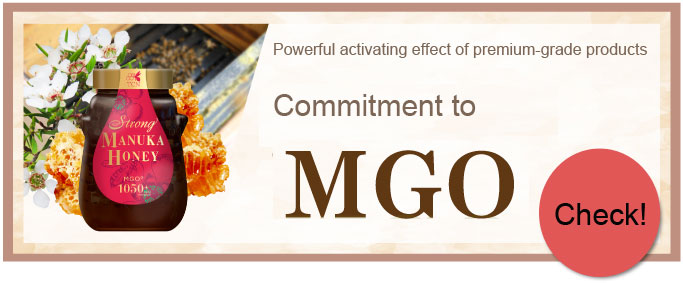
The unique component of Manuka honey, methylglyoxal (MGO), was discovered by Dr. Albert Szent-Györgyi, who won the Nobel Prize for his discovery of vitamin C and his research on scurvy. This substance is present in the cells of all living organisms and is considered to play a key role in controlling physiological processes.
■Reference: About MGO – Strong MANUKA HONEY
Although the antimicrobial activity of Manuka honey has been known for a long time, the exact components responsible for this activity remained a mystery for many years. However, recent research has finally identified methylglyoxal (MGO) as the key substance. MGO works on old, unnecessary, or abnormal cells, inducing them to undergo apoptosis(cell death), which is a toxic process that forces these cells to self-destruct. This substance is present in all living cells, and each cell is equipped to produce it in response to abnormal behavior, ensuring that cells with harmful functions are eliminated. This mechanism helps maintain homeostasis, the system that restores balance to various fluctuations within the organism.
However, all living organisms experience a decline in biological activity over time. In humans, as we age, the production of MGO decreases, which leads to the accumulation of old cells that are not renewed. In the worst case, these cells can become cancerous. To maintain life, it is essential to continually produce new cells, which involves copying the information (DNA) from the original cells to create new ones. During this process, DNA transcription occurs, but errors in copying can lead to the formation of abnormal cells. It is crucial to eliminate these abnormal cells without affecting the surrounding healthy cells. This vital function is increasingly understood to be performed by MGO.
اكتشف العالِم ألبرت سنت ــ جيورجي، الحائز على جائزة نوبل تقديرًا لاكتشافه فيتامين C وأبحاثه حول داء الأسقربوط، المكوّن الفريد في عسل المانوكا المعروف باسم الميثيل غلايوكسال (MGO).
ويُعد هذا المركّب عنصرًا طبيعيًا موجودًا في خلايا جميع الكائنات الحية، ويلعب دورًا أساسيًا في تنظيم العمليات الحيوية داخل الجسم. إنها مادة تحمل في جوهرها بصمة الطبيعة وعمق الحكمة البيولوجية التي تطورت عبر ملايين السنين—ولهذا تمثل الأساس العلمي لقوة عسل المانوكا الأصيلة.
على الرغم من أن الخصائص المضادّة للميكروبات في عسل المانوكا معروفة منذ زمن بعيد، فإن المكوّن الدقيق المسؤول عن هذه القوة ظلّ لغزًا لسنوات طويلة. غير أنّ الأبحاث الحديثة تمكّنت أخيرًا من تحديد الميثيل غلايوكسال (MGO) بوصفه العنصر الجوهري الذي يقف وراء هذا النشاط الحيوي الفريد.
يعمل الـ MGO على الخلايا القديمة أو غير الضرورية أو الشاذّة، محفّزًا إياها على الدخول في الاستماتة، وهي عملية انتحار خلوي منظّم تدمّر فيها الخلايا نفسها لحماية الجسد من الخلل. ويُعد هذا المركّب عنصرًا طبيعيًا موجودًا في جميع الخلايا الحية، إذ تمتلك كل خلية القدرة على إنتاجه عند ظهور سلوك غير طبيعي، ليتمّ التخلص من الخلايا الضارة والحفاظ على التوازن الحيوي داخل الكائن الحي.
ومع مرور الزمن، تتراجع الطاقة الحيوية لدى جميع الكائنات، ويشهد الإنسان خصوصًا انخفاضًا تدريجيًا في إنتاج MGO مع التقدم في العمر. ونتيجة لذلك، تبدأ الخلايا الهرمة بالتراكم دون أن تُستبدل، وقد تتطور في أسوأ الحالات إلى خلايا سرطانية.
إن استمرار الحياة يعتمد على التجدد الخلوي الدقيق، حيث تُنسخ المعلومات الوراثية (DNA) لإنشاء خلايا جديدة. غير أن هذا النسخ قد يخطئ أحيانًا، مما يؤدي إلى نشوء خلايا غير طبيعية. ومن الضروري التخلص من هذه الخلايا الشاذّة دون الإضرار بالخلايا السليمة المحيطة بها—وهو الدور الحيوي الذي تتزايد الأدلة العلمية على أنه منوطٌ بمركّب MGO بشكل أساسي.