
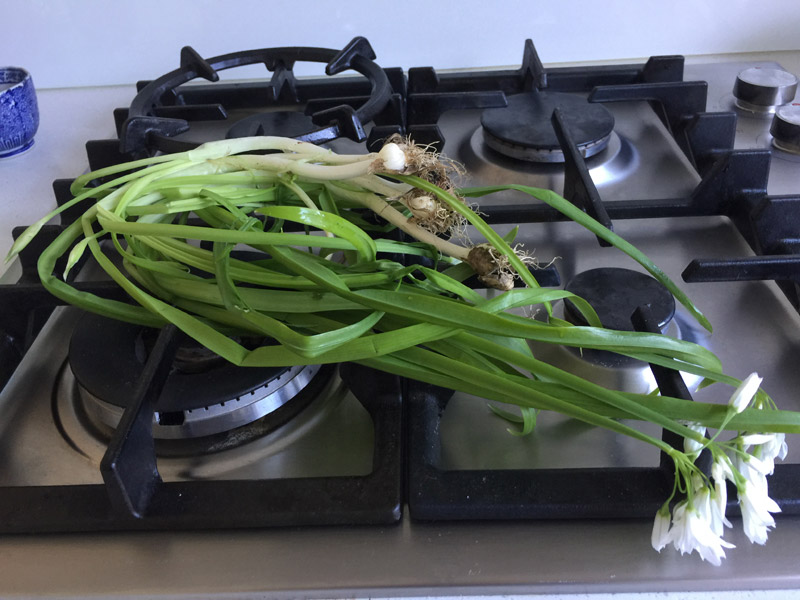
When I go to the apiary, I find myself naturally focusing only on the bees—it’s part of the business, but it puts me in a state of intense concentration. This single-minded focus takes so much energy that eventually, I have to lie back and gaze up at the sky to rest. Only then do I start noticing everything around me and sensing the arrival of spring with all five senses. The humming of bees in flight, the tender green leaves of plants and trees, the fresh scent of the spring breeze, and the birds chirping—all these things come into view when I lay down in the apiary. Right in front of me, a wild garlic plant with pure white, delicate flowers blooms.Seeing how much it has grown brings me joy. As I gently pull up the root, a pure white bulb appears, accompanied by well-developed roots.
I want to finish the hive inspections early so I can go gather wild garlic, but the inspections are crucial this time of year. As temperatures rise, Varroa mites, which are a major enemy of honeybees, can quickly become a serious issue. This spring, there’s a particular concern about an increase in their numbers, so preventive measures are essential. In beekeeping, taking proactive measures is essential. The first priority is replacing the queen bee. A queen with diminished egg-laying ability leads to a decline in colony strength, weakening their defense against natural predators and reducing immunity to various diseases. Another approach is the selective use of insecticides. Although chemical pesticides are fast-acting, I avoid them because they can contaminate the honey and cause significant harm to the bees themselves.
For pest control, I use insecticides derived from natural herbal ingredients. Typically, mite control measures are implemented only after their numbers have increased to a certain extent. However, I believe this approach is too late; I act immediately upon spotting mites. As spring approaches, the queen bee instinctively lays drones to ensure the continuation of the species. When I open the drone cells within the hive, I often find mites attacking the larvae. The larvae are pure white, making it easy to spot the small black mites. As soon as I find even one, I immediately apply an insecticide. There are various types of organic insecticides available, one of which is a ribbon soaked in insecticide. This product primarily utilizes extracts from pyrethrum flowers. I hang two of these ribbons between the frames in each hive, preferably in areas where the bees are concentrated. (To be continued)
عندما أتوجه إلى مربيّاتي، أجد نفسي بطبيعة الحال مركزاً بالكامل على النحل — إنها جزء من العمل، لكن هذا التركيز العميق يستنزف طاقتي حتى أضطر لاحقاً إلى الاستلقاء والنظر إلى السماء للراحة. ومن هناك، تبدأ الحواس الخمس في التقاط قدوم فصل الربيع: طنين النحل في الهواء، أوراق النباتات والشجر خضراء وناعمة، نسيم الربيع العَذب، وزقزقة الطيور — كلّ ذلك يحيط بي بينما أستلقي وسط مربيّات النحل. أمامي، تنبُت نبات الثوم البري بأزهاره البيضاء النقية الرقيقة، وعندما أقتلع الجذر بلطف يظهر بصلة بيضاء نقية وجذور متشعبة.
أرغب في إنهاء فحص الخلايا باكراً حتى أتمكن من جمع الثوم البري البري، لكنّ الفحص في هذا الوقت من السنة أمر حيويّ. فمع ارتفاع درجات الحرارة، تزداد خطورة عدّوى Varroa mite، العدوّ الكبير للنحل. هذا الربيع، هناك قلق خاص من تزايد أعدادها، لذا فإنّ اتخاذ تدابير وقائية أمرٌ أساسيّ. في تربية النحل، المبادرة هي المفتاح. أولوية الأولى هي استبدال الملكة. فالملكة ذات القدرة على وضع البيض المنخفضة تؤدّي إلى ضعف القوّة في الخلية، ما يقلّل دفاعاتها ضدّ المعتدين الطبيعيين ويُضعف مناعتها ضدّ الأمراض.
ومن النهج الأخرى هو الاستخدام الانتقائي للمبيدات. رغم أنّ المبيدات الكيميائية سريعة المفعول، إلّا أنني أتجنّبها كي لا تلوّث العسل أو تُلحق ضرراً بالنحل نفسه. لذلك أعتمد في مكافحة الآفات على مستخلصات طبيعية من الأعشاب. في العادة تُطبق التدابير عند ازدياد الأعداد، لكنني أعتقد أنّ هذا التأخّر يُعدُّ متأخّراً؛ فأنا أتصرف فور اكتشاف أول عثة. ومع حلول الربيع، تضع الملكة النحل الذكوري لضمان استمرار النوع، وعند فتحي لخلايا الذكور أرى كثيراً العثٍّ يهاجم اليرقات البيضاء النقيّة، وتُرى العثّات السوداء الصغيرة بوضوح. وبمجرد رؤيتي لإحدى هذه العثّات، أضع المبيد فوراً. هناك أنواعٌ مختلفة من المبيدات العضوية، ومن أحدها شريط مشبّع بالمبيد يُعلّق بين الإطارات في كل خلية، ويفضّل وضعه في المناطق التي تتركّز فيها النحلات.