
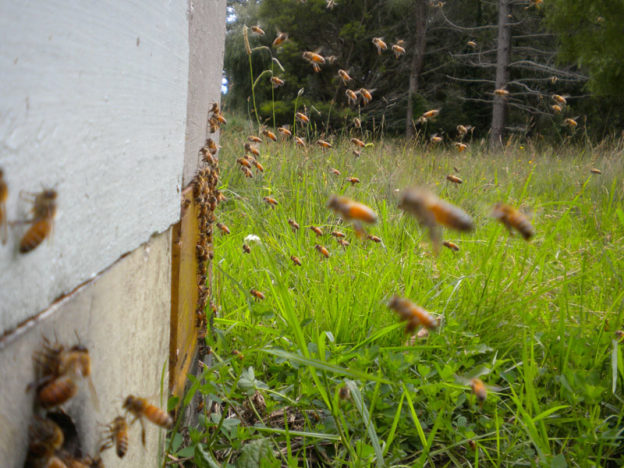
In the apiary, an average of about 30 hives (30 colonies) are set up together in various locations, all within natural Manuka forests. In winter, especially, there is frequent rain and limited sunlight, so we clear areas within the Manuka forest to create hive sites. Poor ventilation and low sunlight are not ideal for bees, as lower temperatures and humidity inside the hives can weaken the bees’ immunity and lead to disease outbreaks. During the clearing process, many Manuka seeds fall, quickly regenerating the forest. So, no matter how much we clear, the Manuka trees do not become depleted; instead, it promotes forest renewal.
More important than this is the removal of fast-growing weeds that sprout even faster. When hives become overgrown with weeds, ventilation suffers, so it’s essential to regularly clear the entrance areas to ensure bees can move in and out freely. Like farmers in Japan, we use small-engine weed trimmers here, but it’s quite a job. Even after cutting the grass, new shoots quickly appear and grow back, requiring us to repeat the task regularly. If the weeds are pulled out by the roots with a weeding hoe, we can reduce the weeding cycle. However, prolonged weeding with a hoe is hard work. After considering different options, I decided to modify the trimmer so it could be used to pull up newly sprouting weeds by the roots.
Typically, a brush cutter has a circular saw blade or nylon line attached to a high-speed rotating shaft. By rotating it close to the ground and moving it in a fan shape from side to side, weeds are trimmed at the base. For this modification, I attached a strong iron plate to the rotating shaft. Near each end of this plate, I drilled holes and inserted two 10mm diameter bolts, each about 5cm long, securing them firmly with nuts. I immediately tried it out to see how it would perform.
When I placed the two bolts attached to the high-speed rotating brush cutter into the soil, it created an intense cloud of dust, churning the soil and blasting weed sprouts from their roots. However, without a guide, it was extremely dangerous; pebbles and other debris were flying directly at me. Despite this, I was satisfied with the experimental results. To improve safety, I plan to cut and weld a thin metal sheet to create a guide bar that will direct debris forward, preventing it from flying back towards me. As I need to prioritize responses to inquiries from customers in Japan, I only have limited time to work on this weeding project. But once completed, I believe it will greatly improve efficiency. The real appeal of DIY is the thrill of testing one’s own ideas to see if they work as intended.
في مواقع تربية النحل، نقوم عادةً بتركيب نحو 30 خلية (30 مستعمرة) في كل موقع، جميعها داخل غابات المانوكا الطبيعية. وخلال فصل الشتاء على وجه الخصوص، يكثر هطول الأمطار ويقلّ سطوع الشمس، لذلك نعمل على فتح مساحات داخل غابة المانوكا لإنشاء مواقع مناسبة للخلايا. إن ضعف التهوية وقلة أشعة الشمس لا يُعدّان بيئة مثالية للنحل، إذ إن انخفاض درجات الحرارة وارتفاع الرطوبة داخل الخلايا قد يضعفان مناعة النحل ويؤديان إلى انتشار الأمراض.
وخلال عمليات الإزالة والتنظيف، تتساقط كميات كبيرة من بذور المانوكا، ما يؤدي إلى تجدد الغابة بسرعة. لذلك، مهما قمنا بإزالة الأشجار في حدود معقولة، فإن غابات المانوكا لا تتناقص، بل على العكس، يتم تحفيز تجددها الطبيعي.
غير أن التحدي الأكبر يكمن في الأعشاب سريعة النمو، التي تنبت بوتيرة أسرع من المتوقع. فعندما تحيط الأعشاب بالخلايا، تتدهور التهوية، ما يجعل من الضروري تنظيف مداخل الخلايا بانتظام لضمان حركة النحل بحرية. وكما هو الحال مع المزارعين في اليابان، نستخدم هنا آلات قصّ الأعشاب ذات المحركات الصغيرة، إلا أن هذه المهمة شاقة للغاية. فحتى بعد قصّ الأعشاب، سرعان ما تظهر براعم جديدة وتنمو مجددًا، ما يفرض علينا تكرار العمل مرارًا.
أما إذا تم اقتلاع الأعشاب من جذورها باستخدام أداة يدوية، فيمكن تقليل عدد مرات التنظيف. غير أن العمل المتواصل بهذه الطريقة مرهق بدنيًا. وبعد دراسة عدة خيارات، قررتُ تعديل آلة قصّ الأعشاب بحيث يمكن استخدامها لاقتلاع الأعشاب الصغيرة من جذورها فور نموها.
في العادة، تكون آلة القص مزوّدة بشفرة دائرية أو بخيط نايلون مثبت على عمود يدور بسرعة عالية. وعند تحريكها قريبًا من سطح الأرض بحركة جانبية، يتم قطع الأعشاب من قاعدتها. في هذا التعديل، قمتُ بتثبيت صفيحة حديدية قوية على العمود الدوّار، وحفرتُ ثقبين قرب طرفيها، ثم أدخلتُ مسمارين بقطر 10 ملم وطول نحو 5 سم لكل منهما، وثبّتُّهما بإحكام باستخدام الصواميل. وبعدها، بادرتُ فورًا بتجربة الأداء العملي.
عندما أدخلتُ المسمارين المثبتين على الآلة الدوّارة عالية السرعة في التربة، تصاعدت سحابة كثيفة من الغبار، وبدأت التربة بالتحرّك بعنف، بينما اقتُلعت براعم الأعشاب من جذورها. غير أن غياب حاجز توجيهي جعل التجربة خطرة للغاية، إذ تطايرت الحصى والشوائب مباشرة باتجاهي. وعلى الرغم من ذلك، كنت راضيًا عن النتائج التجريبية. ولتحسين مستوى الأمان، أخطّط لقصّ ولحام صفيحة معدنية رقيقة لتشكيل قضيب توجيه يعمل على دفع الشوائب إلى الأمام، ومنعها من الارتداد نحوي.
ونظرًا لانشغالي بالرد على استفسارات العملاء في اليابان، لا يتوفر لدي سوى وقت محدود للعمل على هذا المشروع. ومع ذلك، فإنني على يقين بأنه عند اكتماله، سيُحدث تحسّنًا كبيرًا في الكفاءة. فجوهر العمل اليدوي (DIY) يكمن في متعة اختبار الأفكار الشخصية، ورؤية ما إذا كانت ستنجح بالفعل كما خُطط لها.