
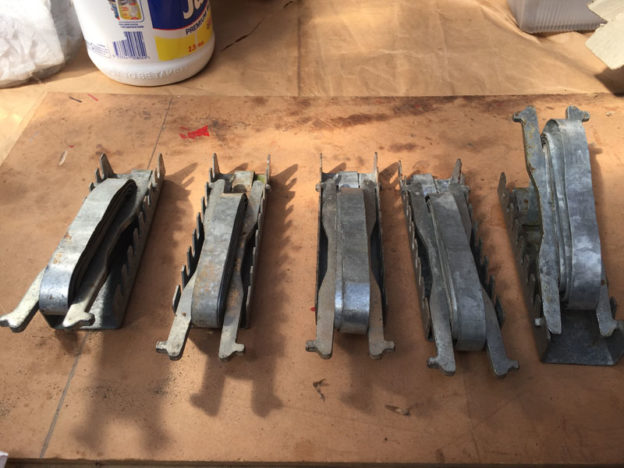
As I mentioned previously, the rain is delaying my work. Opening the hives carelessly would be a disturbance to the honeybees, but I can’t ignore their condition either, so I check the colonies that concern me during brief breaks in the rain. I do this quickly, taking care to keep the temperature stable and avoid letting moisture in. I make sure each hive is tightly secured with metal bands (see photo) to keep it sealed, as gaps can cause the internal temperature to drop. This process must be done efficiently and in a short time.
Because I tighten the metal bands so much, some break due to rust, and I always bring extra ones just in case. I keep the broken bands in storage and repair them when I have time. To repair them, I overlap the two ends, drill two holes through both, and insert two rivets to hold them together. This is a cumbersome and time-consuming process, and I’ve been thinking if there might be a faster, better way. I have many tools we need, and even a welding machine, but arc welding thin metal bands is extremely difficult — they melt instantly, a challenge even for a professional welder.
So a spot welder* would be convenient, allowing repairs to be done in a very short time. However, a spot welder used by car manufacturers can cost several million yen, and even simpler ones are quite expensive — hundreds of thousands of yen. *Spot welder: two base materials (workpieces) are pressed together with electrodes while current flows through them. The electrical resistance at their point of contact generates heat, causing the metal to melt and solidify, thereby forming a weld. “If you don’t have it, make it yourself”—that’s the DNA I inherited from my father. So I get started right away with preparations.
Fortunately, I had two broken microwaves at home, so I decided to reuse their components to make it. A microwave oven operates by generating microwaves that cause molecular vibrations, using that energy to produce heat. The microwave generator requires a high voltage of 3,000 volts, which is provided by a transformer. In broken microwaves, it’s usually the magnetron damaged, while the transformer is rarely damaged. As expected, the transformers from both broken microwaves were in good condition. (To be continued)
— رؤية حرفية بروح ابتكارية
كما ذكرتُ سابقًا، ما زال المطر يعرقل سير العمل. فتح خلايا النحل بلا مبالاة يشكّل إزعاجًا للنحل، لكن لا يمكنني في الوقت ذاته تجاهل حالته. لذلك أستغل الفترات القصيرة التي يتوقف فيها المطر لأتفقد الطوائف التي تثير قلقي، بسرعة ودقّة، مع الحرص الشديد على الحفاظ على درجة الحرارة داخل الخلية ومنع تسرب الرطوبة. أقوم بإحكام إغلاق كل خلية باستخدام أحزمة معدنية قوية (كما يظهر في الصورة)، لأن أي فراغ بسيط قد يؤدي إلى انخفاض الحرارة الداخلية. يجب إنجاز هذا العمل بكفاءة عالية وفي وقت قصير جدًا.
ونظرًا لشدة إحكام هذه الأحزمة، فإن بعضها ينكسر بسبب الصدأ، لذلك أحمل دائمًا أحزمة احتياطية. أما الأحزمة المكسورة فأحتفظ بها لإصلاحها عندما يتوفر الوقت. طريقة الإصلاح الحالية تتطلب تداخل طرفي الحزام، ثم حفر ثقبين فيهما معًا وتثبيتهما بمسامير معدنية (ريفيت). إنها عملية مرهقة وتستغرق وقتًا طويلًا، وكنت أتساءل دائمًا: ألا توجد طريقة أسرع وأكثر كفاءة؟
نملك العديد من الأدوات، وحتى آلة لحام، لكن لحام الأحزمة المعدنية الرقيقة باللحام القوسي يكاد يكون مستحيلًا؛ إذ تذوب فورًا، وهو أمر يشكّل تحديًا حتى للمحترفين. من هنا، بدا لي أن آلة اللحام النقطي ستكون الحل المثالي، إذ تتيح إصلاح الأحزمة في وقت قصير جدًا. غير أن آلات اللحام النقطي المستخدمة في مصانع السيارات قد يصل سعرها إلى عدة ملايين من الينات، وحتى النماذج البسيطة منها تتجاوز مئات الآلاف من الينات.
آلة اللحام النقطي: هي تقنية يتم فيها ضغط قطعتين معدنيتين معًا بواسطة أقطاب كهربائية، مع تمرير تيار كهربائي عبر نقطة التلامس. وبسبب المقاومة الكهربائية، تتولد حرارة تذيب المعدن موضعيًا، ثم يتصلّب ليشكّل لحامًا متينًا. «إن لم يكن لديك، فاصنعه بنفسك» — هذه هي الروح التي ورثتُها عن والدي. ومن هذا المبدأ، بدأتُ التحضيرات فورًا.
ولحسن الحظ، كان لديّ في المنزل جهازا ميكروويف معطّلان. قررتُ إعادة استخدام مكوّناتهما. يعمل فرن الميكروويف عبر توليد موجات دقيقة تُحدث اهتزازًا جزيئيًا ينتج عنه حرارة، ويتطلب هذا النظام جهدًا عاليًا يصل إلى 3000 فولت، يوفره محوّل كهربائي خاص. في معظم حالات تعطل أفران الميكروويف، يكون الخلل في المغنطرون، بينما نادرًا ما يتضرر المحوّل. وكما توقعت، كانت المحوّلات في الجهازين بحالة ممتازة.