
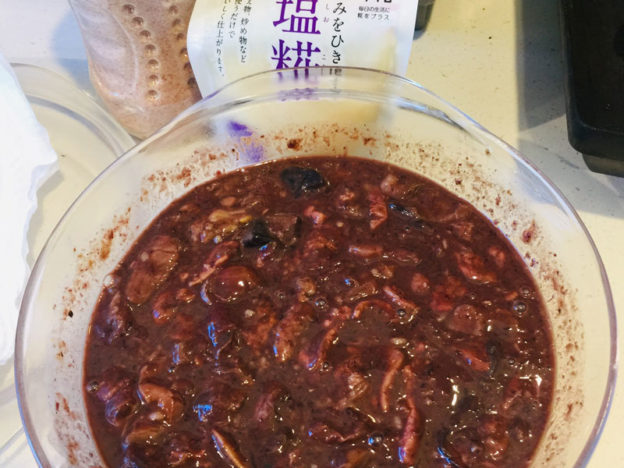
Continuing from previous blog, I ordered bonito directly via online shopping and requested that the internal organs remain untouched. Typically, large fish arrive with the innards removed, likely to better preserve freshness. When I opened the fish’s belly, the clean, plump organs came out intact—a clear sign of freshness. There are various ways to prepare shutō (fermented fish sauce), but I have two methods of my own. First, it’s crucial to remove the gallbladder, which contains bitter components, while the fish is still fresh. If forgotten, removing it after fermentation becomes quite challenging.
Then, the innards are either sprinkled with rock salt and left to ferment for two weeks as is, or alternatively, they are removed immediately, the digestive tract contents are cleaned out, cut into appropriate sizes, and mixed with rock salt, sake, and mirin for direct pickling. Personally, I find it tastier to first lightly pickle the innards for two weeks in their natural state and then proceed to the main pickling stage after fermentation. This process seems to enhance the depth of flavor. In essence, the method involves removing the innards, discarding the gallbladder, and pickling them with just salt. After two weeks in the refrigerator, the contents of the digestive tract are removed, and the innards are prepared for the main pickling stage. The fermentation speed can be adjusted depending on the amount of rock salt used. I prefer using a slightly higher salt concentration to allow for a slower and more thorough aging process.
The advantage of pre-pickling is that the innards are pickled as they are, without washing them in water after being removed from the belly. By fermenting all the contents of the digestive tract and the blood together, it creates an exceptionally deep and rich flavor. In fact, depending on the contents of the intestinal tract, it’s often better not to remove them. For instance, when the fish has eaten a large amount of krill, allowing it to ferment as is produces a more delicious result. After fermentation, the innards are cut into appropriate sizes, and as previously mentioned, sake and mirin are added for further fermentation over an additional week. Katsuo (bonito) is a fish with a high blood content, and this blood, when fermented, transforms into a rich fish sauce, adding even more depth to the flavor. When making shutō, the balance of salt is crucial. I prefer to use rock salt, as refined salt tends to be overly salty without any sweetness or mellowness. Once the shutō is prepared, I portion it out for eating, making sure to stir it thoroughly each time to incorporate air.
This method allows the shutō to remain delicious for up to a month after it’s made. As the fermentation progresses, the initial saltiness gradually fades. Additionally, dissolving sake lees in Japanese sake or using shio-koji during the fermentation process enhances the aroma and gives the final product a milder. Manuka honey also develops higher activity levels and a smoother flavor when it is allowed to ripen further in the hive after reaching full maturity. While this process is unrelated to fermentation of shutō, raw honey gains depth and richness over time. It has a unique quality that sets it apart from heat-treated and mass-produced products.
استكمالًا للمقال السابق، قمت بطلب سمك الكاتسو (البونيتو) مباشرة عبر الشراء الإلكتروني، مع طلب خاص بعدم إزالة الأحشاء. عادةً ما تصل الأسماك الكبيرة بعد تنظيفها من الداخل حفاظًا على الطزاجة، لكن عند فتح بطن السمكة هذه المرة، ظهرت الأحشاء كاملة، نظيفة وممتلئة، في دليل واضح على جودة استثنائية وحداثة الصيد.
توجد طرق متعددة لتحضير الشوتو، لكن لدي طريقتان خاصتان. الخطوة الأهم هي إزالة المرارة فورًا بينما تكون السمكة طازجة، إذ تحتوي على مركبات شديدة المرارة، وإهمال هذه الخطوة يجعل إزالتها بعد التخمير شبه مستحيلة.
بعد ذلك، تُتبع إحدى طريقتين: إما رشّ الأحشاء بالملح الصخري وتركها لتتخمّر كما هي لمدة أسبوعين، أو إزالة الأحشاء مباشرة، تنظيف محتويات القناة الهضمية، تقطيعها إلى أحجام مناسبة، ثم تخليلها فورًا بالملح الصخري مع الساكي والميرين.
شخصيًا، أفضّل الطريقة الأولى، أي التخليل الخفيف لمدة أسبوعين دون تنظيف، ثم الانتقال إلى مرحلة التخليل الأساسية. هذه الخطوة المسبقة تضيف عمقًا وتعقيدًا أكبر للنكهة. باختصار، يتم استخراج الأحشاء، إزالة المرارة فقط، ثم تخليلها بالملح وحده. بعد أسبوعين في الثلاجة، تُزال محتويات الجهاز الهضمي، وتبدأ مرحلة التخمير الرئيسية.
يمكن التحكم في سرعة التخمير حسب كمية الملح المستخدم، وأنا أميل إلى استخدام تركيز أعلى قليلًا لإطالة فترة التعتيق ومنح النكهة نضجًا أعمق. ميزة هذه الطريقة أن الأحشاء لا تُغسل بالماء بعد إخراجها، بل تُخمّر مع الدم ومحتويات الجهاز الهضمي، ما ينتج طعمًا غنيًا وكثيفًا للغاية. في بعض الحالات، يكون من الأفضل عدم إزالة هذه المحتويات، خاصة إذا كانت السمكة قد تغذّت على كميات كبيرة من الكريل، إذ يضفي ذلك مذاقًا أكثر تميّزًا.
بعد انتهاء التخمير الأولي، تُقطّع الأحشاء وتُضاف كمية من الساكي والميرين، ثم تُترك لتتخمّر مجددًا لمدة أسبوع إضافي. سمك الكاتسو غني بالدم، وهذا الدم عند تخميره يتحوّل إلى صلصة بحرية عميقة الطابع، تعزّز من تعقيد النكهة.
التوازن الدقيق للملح عنصر حاسم في نجاح الشوتو. أفضل استخدام الملح الصخري، لأن الملح المكرر يعطي ملوحة حادة تفتقر إلى الاستدارة والنعومة. بعد اكتمال التحضير، يُقسّم الشوتو إلى حصص صغيرة، مع الحرص على تقليبه جيدًا في كل مرة لإدخال الهواء وتحسين النكهة.
بهذه الطريقة، يبقى الشوتو في ذروة مذاقه لمدة تصل إلى شهر، ومع تقدّم التخمير تخف حدّة الملوحة تدريجيًا. كما أن إضافة تفل الساكي المذاب في الساكي، أو استخدام الشيو-كوجي أثناء التخمير، يمنح العطر نعومة ورقيًا إضافيًا.
وعلى نحو موازٍ، فإن عسل المانوكا، رغم أنه لا يخضع للتخمير، يزداد نشاطًا وعمقًا عندما يُترك لينضج تمامًا داخل الخلية. العسل الخام، بمرور الوقت، يكتسب ثراءً ونكهة متعدّدة الطبقات، وهي خصائص لا يمكن مقارنتها بالمنتجات المعالجة حراريًا أو المنتجة على نطاق واسع. إنها قيمة الأصالة، والصبر، والاحترام العميق للطبيعة — وهي فلسفة واحدة، سواء في المطبخ أو في الخلية.