
Last time, I talked about katsuo (bonito), but my interest in food never fades, so let me add a bit more. There’s a traditional way of preparing bonito called tataki, where the surface is seared over high heat. Personally, I don’t understand what’s so appealing about this method. People say it lets you enjoy both grilled and raw flavors, but for me, I can’t tell what I’m actually eating. My tastes seem to mirror my father’s: if there’s one truly delicious thing, that’s enough. I’m not a fan of multi-course meals with dish after dish. Often, they aren’t particularly good, and the flavors end up blending together, leaving me unsure of what I’m even tasting.
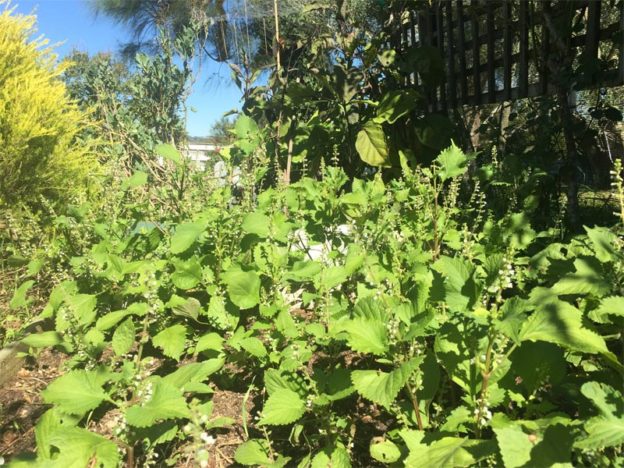
The best way to enjoy bonito, in my opinion, is with grated garlic and julienned shiso leaves. Shiso leaves (Japanese basil), as shown in the image, are impossible to find here. So, when my wife visited Japan earlier this year, she brought some seeds. I was unsure they’d grow well since we planted them a bit late, but they flourished, so now we can save seeds and have a steady supply of shiso. I’m even planning to build a simple greenhouse when I have the time. In the end, I turned the five leftover bonito into kakuni—a soy-flavored simmered dish—and dried the pieces in a basket under the sun for about three days. The result was beautifully firm, with a concentrated flavor. I often take these dried bonito pieces as onigiri fillings when I head out to the apiary. They pair perfectly with umeboshi (pickled plum) and make for the ultimate meal when I’m relaxing in a hammock amidst the Manuka forest.
By the way, the other day, when I was a bit tired at the apiary, I took a nap in the shade of a tree and a stoat (a small animal from the weasel family) appeared at my feet, licking the honey off my boots. It was so cute that I let it be, but eventually, it noticed me and ran off toward the Manuka forest. The stoat seems to have been introduced by humans from abroad, and despite being a cute little animal, it’s actually a very ferocious carnivore that preys on native species, including New Zealand’s national bird, the kiwi. Consequently, the authorities are encouraging its control. In the mountains, I can also enjoy seeing quails, pheasants, New Zealand pigeons—more than three times the size of Japanese wood pigeons—and beautiful red parrots.
في المرة السابقة تحدّثتُ عن سمك الكاتسو (البونيتو)، لكن شغفي بالطعام لا يخبو أبدًا، لذا اسمحوا لي أن أضيف القليل. هناك طريقة تقليدية لتحضير البونيتو تُسمّى تاتاكي، حيث يُشوَى سطح السمكة بسرعة على نار عالية. شخصيًا، لم أفهم يومًا سرّ جاذبية هذه الطريقة. يقال إنها تتيح لك الاستمتاع بنكهات المشوي والنيّئ معًا، لكن بالنسبة لي، لا أستطيع تمييز ما الذي أتناوله فعليًا. يبدو أن ذائقتي تشبه ذائقة والدي: إن كان هناك شيء واحد لذيذ حقًا، فهذا يكفي. لست من محبّي الموائد المتعددة الأطباق، حيث تتوالى الصحون دون تميّز حقيقي، وتختلط النكهات إلى حدّ يجعلك غير متأكد مما تتذوقه أصلًا.
أفضل طريقة للاستمتاع بالبونيتو، في رأيي، هي تناوله مع الثوم المبشور وأوراق الشيسو المقطّعة إلى شرائح رفيعة. أوراق الشيسو (الريحان الياباني)، كما هو موضّح في الصور، يكاد يكون من المستحيل العثور عليها هنا. لذلك، عندما زارت زوجتي اليابان في وقت سابق من هذا العام، أحضرت معها بعض البذور. كنت مترددًا في نجاح زراعتها لأننا زرعناها متأخرين قليلًا، لكنها نمت بشكل رائع، وأصبح بإمكاننا الآن حفظ البذور وضمان إمداد مستمر من الشيسو. بل إنني أخطّط لبناء دفيئة بسيطة عندما يسمح الوقت.
أما قطع البونيتو الخمس المتبقية، فقد حوّلتها في النهاية إلى كاكوني—طبق مطهو ببطء بنكهة الصويا—ثم جففتها في سلة تحت أشعة الشمس لمدة ثلاثة أيام تقريبًا. جاءت النتيجة متماسكة وجميلة، بنكهة مركّزة وعميقة. غالبًا ما أحمل هذه القطع المجففة كحشوة للأونيغيري عندما أذهب إلى المناحل. إنها تتناغم على نحو مثالي مع الأوميبوشي (البرقوق المخلل)، لتشكّل وجبة لا تضاهى عندما أستريح في أرجوحة وسط غابات المانوكا.
وبالمناسبة، في أحد الأيام، بينما كنت متعبًا قليلًا في المنحل، أخذت قيلولة في ظل شجرة، فظهر عند قدمي حيوان صغير من فصيلة ابن عرس، يلعق العسل عن حذائي. كان لطيفًا إلى حد أنني تركته وشأنه، لكنه ما لبث أن لاحظني وفرّ هاربًا نحو غابة المانوكا. هذا الحيوان أُدخل إلى نيوزيلندا على يد البشر، ورغم مظهره الظريف، إلا أنه مفترس شرس يهدد الأنواع المحلية، بما في ذلك طائر الكيوي، الرمز الوطني للبلاد. لذلك، تشجّع السلطات على السيطرة على أعداده. وفي الجبال، يمكنني أيضًا الاستمتاع بمشاهدة السمان، والتدرّج، والحمام النيوزيلندي—الذي يفوق الحمام الياباني حجمًا بأكثر من ثلاث مرات—إضافة إلى ببغاوات حمراء جميلة، تشكّل جميعها مشهدًا غنيًا يعكس وفرة الطبيعة من حولي.