
Last time, I talked a bit about adding more hives as the nectar flow season approaches, since the colonies increase in number, and conversely, reducing the number of hives as autumn approaches. This is in preparation for the coming cold. The goal is to make the space inside the hives as small as possible to help retain warmth within the colony. However, as mentioned before, this time of year is characterized by significant fluctuations in temperature. Just when it seems like winter is really settling in, the temperature suddenly rises to summer-like levels, making this task far from straightforward. Everything must be handled by carefully observing the strength of each individual colony.
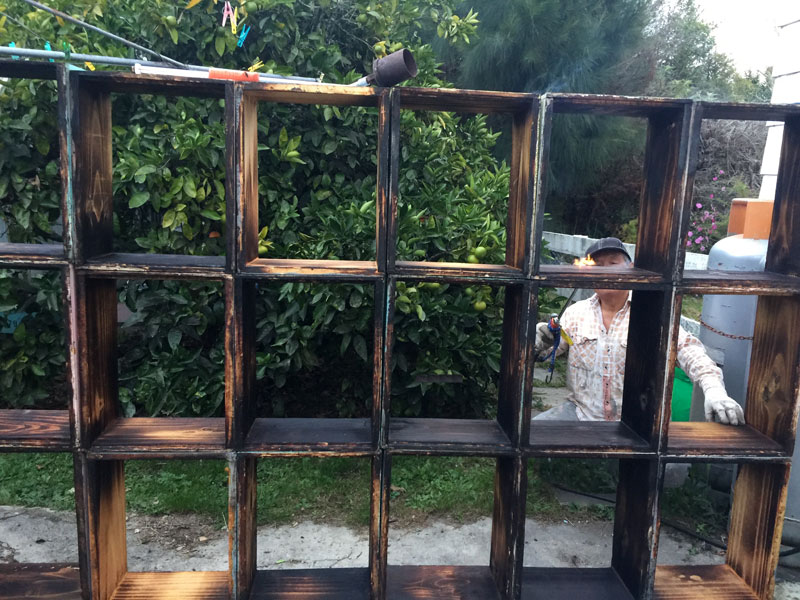
The hives removed from the apiary are checked by their identification numbers and then transported to the storage facility. Using a hive tool, an essential tool for beekeepers, the wax and propolis attached to each hive are scraped off. The wax collecting on the sheet below is gathered, heated, and stored as beeswax. After removing a certain amount of residue, the hives are scorched with a gas burner until scorched, disinfecting and sterilizing them. The temperature of the large burner exceeds 2000°C, and its flame reaches up to one meter, which easily eradicates pests like wax moths and mites. At the same time, it helps maintain the cleanliness of the hives by protecting them from diseases caused by viruses and fungi.
This process is also applied to new hives. We have confirmed that when the surface of a hive box is scorched, pests such as mites and wax moths tend to avoid it, likely due to the carbon residue, which appears to have a repellent effect. Additionally, from experience, we know that carbonized hives do not provide a suitable environment for the growth of viruses and fungi, and the risk of mold development due to humidity during the upcoming rainy season is significantly reduced. Normally, beekeepers here don’t manage their hives this thoroughly, and I’ve never heard of it being done. However, to my surprise, when I visited a beekeeping supply store recently, I saw that they’ve started selling hives that have already been scorched in an electric kiln— something that didn’t exist in the past.
According to the store clerk, these hives supposedly reduce the occurrence of pests and diseases. I even wondered if they had copied my method. However, simply scorching the hive slightly in an electric kiln leaves me skeptical about its effectiveness. The bees in my freshly scorched hives turn completely black, almost like a different species, but I’ve never had any issues with diseases or pests from these bees. Eventually, the black bees return to their normal color, but since carbon is used in purification systems like activated charcoal, I’ve come to believe that it benefits the bees’ living environment. Of course, the dark color of my Manuka honey has nothing to do with this carbon process. (Haha)
لكن كما ذكرت سابقاً، هذا الوقت من السنة يشهد تقلبات كبيرة في درجات الحرارة. حين يبدو أن الشتاء قد استقر تماماً، ترتفع درجات الحرارة فجأة لتصل إلى مستويات صيفية، مما يجعل هذه المهمة بعيدة عن البساطة. كل شيء يجب التعامل معه بمراقبة دقيقة لقوة كل مستعمرة على حدة.
يتم فحص الخلايا التي تُزال من المنحل بواسطة أرقام التعريف الخاصة بها، ثم تُنقل إلى المستودع. باستخدام أداة الخلايا، وهي أداة أساسية للنحالين، يتم كشط الشمع والبروبوليس الملتصق بكل خلية. يُجمع الشمع المتساقط على الصفائح السفلى، ويُسخن ثم يُخزن كـ شمع نحل.
بعد إزالة كمية معينة من البقايا، يتم حرق الخلايا باستخدام موقد غازي حتى تتحمر تماماً، مما يعقمها ويطهرها. تصل درجة حرارة الموقد الكبيرة إلى أكثر من 2000°م، ويصل لهبها إلى متر واحد، ما يضمن القضاء التام على الآفات مثل فراش الشمع والعث، وفي الوقت نفسه يحافظ على نظافة الخلايا وحمايتها من الأمراض الفيروسية والفطرية. يُطبق هذا الأسلوب أيضاً على الخلايا الجديدة. لقد لاحظنا أنه عند تحميص سطح صندوق الخلية، تتجنب الآفات مثل العث وفراش الشمع المكان، ربما بسبب بقايا الكربون التي يبدو أن لها تأثيراً طاردًا. وبالإضافة إلى ذلك، ومن خلال التجربة، نعلم أن الخلايا المحترقة بالكربون لا توفر بيئة مناسبة لنمو الفيروسات والفطريات، ويقل خطر تكون العفن نتيجة الرطوبة خلال موسم الأمطار القادم بشكل ملحوظ.
عادة، النحالون هنا لا يديرون خلاياهم بهذا المستوى من الدقة، ولم أسمع عن تطبيق هذا الأسلوب من قبل. لكن، لدهشتي، عندما زرت مؤخراً متجر مستلزمات النحل، رأيت أنهم بدأوا بيع خلايا تم تحميصها مسبقاً في فرن كهربائي—شيء لم يكن موجوداً في الماضي.
بحسب موظف المتجر، هذه الخلايا تقلل من انتشار الآفات والأمراض. حتى أنني تساءلت إن كانوا نسخوا طريقتي. مع ذلك، مجرد تحميص بسيط في فرن كهربائي يجعلني متشككاً في فعاليته. فالنحل في خلاياي المحترقة حديثاً يصبح أسود تماماً، وكأنها نوع مختلف، ومع ذلك لم أواجه أي مشاكل تتعلق بالأمراض أو الآفات. في النهاية، تعود النحل السوداء إلى لونها الطبيعي، لكن الكربون في أنظمة التطهير مثل الفحم النشط، يبدو أنه يفيد بيئة عيش النحل. بالطبع، لون عسلي المانوكا الغامق لا علاقة له بهذه العملية الكربونية. (هاها)