
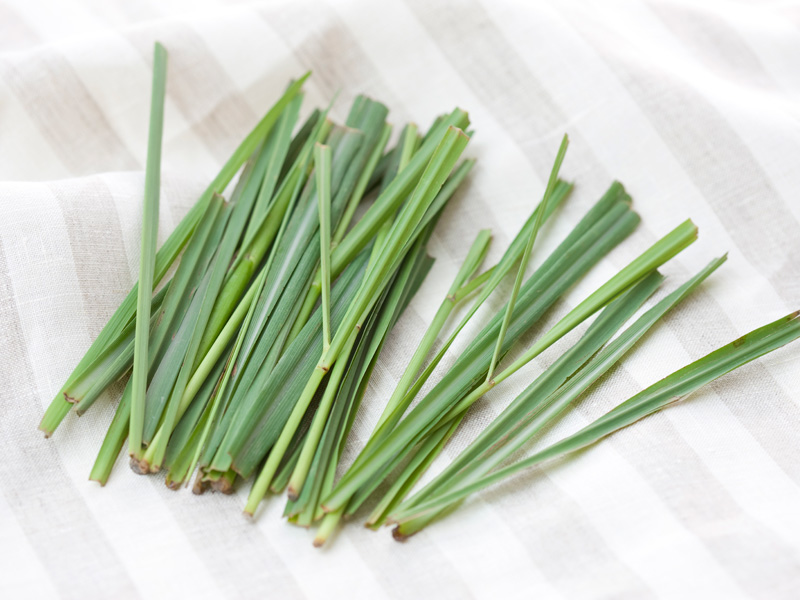
Last time, we discussed how the components of herbs like pyrethrum and thyme are used in insecticides for Varroa destructor. Ethyl alcohol is used to extract these active ingredients, and it seems that alcohol is often employed for extracting plant components in perfumes as well. Alcohol is also used for the extraction of propolis. The method is very simple: after drying the herbs or medicinal plants you want to extract, place them in a container and fill it with alcohol, letting it sit for a while so the essence can dissolve. I learned that lemongrass is used as an ingredient in insect repellent sprays, so I decided to try making my own.
Since I have plenty of lemongrass growing in my garden like a weed, I quickly cut some, bundled it up, and hung it upside down on the terrace. After about two weeks, I decided to use it. Lemongrass belongs to the Poaceae family, the same botanical family as rice, and it is a plant that closely resembles Japanese pampas grass. Lemongrass is essential in Thai dishes like Tom Yum Kung. If you soak it in alcohol for about two weeks, extracting its components is quite simple. This applies not only to lemongrass but also to many herbs and medicinal plants—most essences can be extracted using ethanol (ethyl alcohol). Lemongrass, in particular, is known to repel mosquitoes, and by dissolving my homemade alcohol essence in water and using a spray bottle, I can create a great insect repellent.
Alcohol completely dissolves in water, allowing for flexible concentration adjustments, and I hang it from various trees in my garden. This way, no matter where I am in the garden, I have insect repellent nearby, which is very convenient. Recently, I haven’t been bothered by pesky mosquitoes even in the evening. In beekeeping, the work can only be done after all the worker bees have returned to the hive, making this spray an essential item at that time, and it has been very useful. While it’s true that you can buy anything with money, there’s a special joy and satisfaction that comes from making something yourself, especially when it proves to be useful.
That’s why I enjoy repairing and creating things whenever I have the time; if I can create or fix something that works well, I often feel more attached to it than to something I purchased.
في المرة السابقة، تحدثنا عن كيفية استخدام مكونات الأعشاب مثل البيرثروم والزعتر في المبيدات الخاصة بـ Varroa destructor. يتم استخدام الكحول الإيثيلي لاستخراج هذه المكونات الفعالة، ويبدو أن الكحول غالبًا ما يُستخدم أيضًا في استخلاص مكونات النباتات للعطور. يُستخدم الكحول أيضًا لاستخراج البروبوليس. الطريقة بسيطة للغاية: بعد تجفيف الأعشاب أو النباتات الطبية المراد استخراجها، توضع في وعاء ويُملأ بالكحول ويُترك لبعض الوقت حتى يتم امتصاص جوهر المكونات.
تعلمت أن عشب الليمون (Lemongrass) يُستخدم كمكون في بخاخات طارد الحشرات، فقررت تجربة صنع بخاخي الخاص. نظرًا لوجود الكثير من عشب الليمون في حديقتي كنبات بري، قمت بقص كمية منه بسرعة، وربطها، وعلقتها رأسًا على عقب على التراس. بعد حوالي أسبوعين، قررت استخدامه. ينتمي عشب الليمون إلى عائلة الحشائش (Poaceae)، نفس العائلة النباتية للأرز، ويشبه إلى حد كبير عشب البامبا الياباني.
يُعد عشب الليمون عنصرًا أساسيًا في الأطباق التايلاندية مثل Tom Yum Kung. إذا تم نقعه في الكحول لمدة أسبوعين تقريبًا، يصبح استخراج مكوناته سهلاً للغاية. ينطبق هذا ليس فقط على عشب الليمون، بل على العديد من الأعشاب والنباتات الطبية—حيث يمكن استخراج معظم الزيوت العطرية باستخدام الإيثانول (الكحول الإيثيلي). يُعرف عشب الليمون بقدرته على صد البعوض، ومن خلال إذابة مستخلص الكحول المنزلي في الماء واستخدام زجاجة رذاذ، يمكنني صنع بخاخ طارد حشرات فعال جدًا.
يمتزج الكحول تمامًا مع الماء، مما يسمح بتعديل التركيز بحرية. أعلقه على أشجار مختلفة في حديقتي، وبهذه الطريقة، أمتلك دائمًا طارد حشرات بالقرب مني في أي مكان في الحديقة، مما يجعل الأمر مريحًا للغاية. مؤخرًا، لم أعد أعاني من البعوض المزعج حتى في المساء.
في تربية النحل، لا يمكن القيام بالعمل إلا بعد عودة جميع العاملات إلى الخلية، لذا يُعد هذا البخاخ عنصرًا أساسيًا في ذلك الوقت، وقد كان مفيدًا جدًا. صحيح أنه يمكنك شراء أي شيء بالمال، لكن هناك فرحة ورضا خاص عندما تصنع شيئًا بنفسك ويكون مفيدًا بالفعل. لهذا السبب، أستمتع بالإصلاح والابتكار كلما أتيحت لي الفرصة؛ فعندما أتمكن من صنع أو إصلاح شيء يعمل جيدًا، غالبًا ما أشعر بارتباط أكبر به مقارنة بأي شيء اشتريته.