
The food here is generally British-inspired and not particularly flavorful. So, if you come here with high culinary expectations, you might be disappointed. As I’ve mentioned before, when living abroad, it’s essential to create your own enjoyment—otherwise, life can end up feeling dull. I believe that enjoyment is something you generate yourself, not something given by others. Each country has its own unique food culture, and finding enjoyment in meals we consume multiple times a day is particularly important.
In our household, we use spices to add an accent to dishes that might otherwise become repetitive. As I’ve mentioned before, I grow and use various types of herbs, including chili peppers. Even with the same ingredients, different herbs can transform a dish, bringing a fresh flavor to the table. I keep at least ten types of herbs planted year-round, so I always have them on hand. Around this time, many herbs are blooming or producing seeds. Since most are annuals, I cut the stems from the base, bundle them upside down to dry thoroughly, then harvest the seeds by tapping them with a mallet over newspaper to use for planting next year. I crush the dried leaves into powder and store them in empty cans, making it easy to add a touch of spice to dishes whenever I need it.
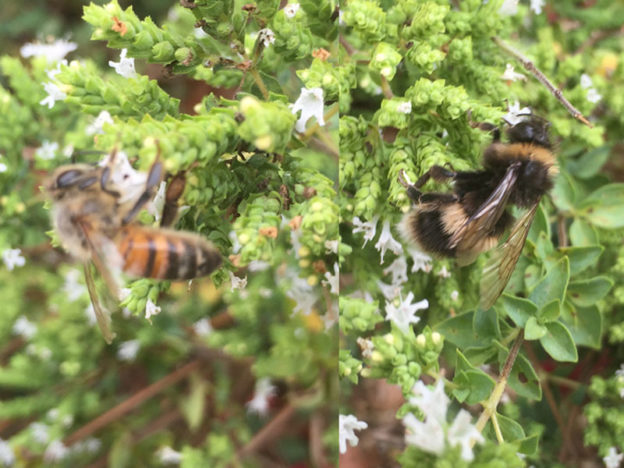
Bees, such as honeybees, bumblebees, and carpenter bees swarm around herb blossoms; they simply love these flowers. The image here shows a honeybee and a carpenter bee. Carpenter bees are particularly plump and large, with long hair covering their entire bodies. They fly around with a loud buzzing sound, and as children, we called them “kumambachi,” thinking, “Being stung by such a huge bee would be dreadful.” However, contrary to this belief, carpenter bees are unthreatening. They’re surprisingly gentle—they’ll land on your hand.
The bees in the image are gathered around oregano flowers, a herb often used in pizza. Bees, especially flower bees, seem to have a particular preference for herb blossoms, likely finding value in bringing the nectar and propolis from these herbs back to their hives. African bees in Brazil also show a preference for herbs and medicinal plants, especially subspecies of rosemary, locally known as “alecrim.” Propolis derived from this herb is highly potent, containing a beneficial component called Artepillin C. It’s as if they are genetically programmed to know the value of herbs. This is similar to how bees naturally visit to the medicinal Manuka tree for producing Manuka honey.
يُعتبر الطعام هنا مستوحًى إلى حدٍ كبير من المطبخ البريطاني، ولا يتميّز بنكهات قوية أو تنوعٍ واسع. لذلك، من يأتي إلى هذا المكان بتوقعاتٍ عالية تجاه المذاق، قد يُصاب بخيبة أمل طفيفة. وكما ذكرتُ سابقًا، فإن العيش في بلدٍ أجنبي يتطلّب أن نصنع متعتنا بأنفسنا، لأنّ الحياة من دون ذلك قد تبدو باهتة ومملة. أنا أؤمن أن السعادة لا تُمنَح من الآخرين، بل تنبع من داخلنا نحن. ولكل دولة ثقافتها الغذائية الخاصة، ومن المهم أن نجد في وجباتنا اليومية مصدرًا للبهجة والانسجام.
في منزلنا، نستخدم التوابل لإضفاء لمسة مميزة على الأطباق كي لا تصبح رتيبة. كما ذكرتُ من قبل، أزرع وأستخدم أنواعًا مختلفة من الأعشاب، بما في ذلك الفلفل الحار. فحتى عندما تكون المكونات نفسها، يمكن للأعشاب المختلفة أن تغيّر الطعم كليًا وتمنح الطبق نكهة جديدة منعشة. أزرع على الأقل عشرة أنواع من الأعشاب طوال العام، لذلك فهي متوفّرة دائمًا في متناول يدي. وفي هذا الوقت من السنة، تبدأ معظم الأعشاب بالتزهير أو إنتاج البذور.
وبما أن أغلبها نباتات سنوية، أقوم بقطع السيقان من القاعدة، وأربطها لتجفّ رأسًا على عقب، ثم أستخلص البذور منها عبر طرقها بلطف فوق صحيفة لأستخدمها في الزراعة للموسم القادم. أما الأوراق المجففة فأطحنها وأحتفظ بها في علب معدنية فارغة، لتكون جاهزة لإضافة نكهةٍ مميزة إلى أي طبق في أي وقت.
تجذب أزهار الأعشاب النحل بمختلف أنواعه — من نحل العسل إلى النحل الطنان وحتى نحل الخشب — فهي ببساطة تعشق هذه الزهور. في الصورة يظهر نحل العسل ونحل الخشب؛ الأخير يتميز بجسمه الممتلئ وكثافة الشعر الذي يغطيه بالكامل، ويصدر أثناء طيرانه طنينًا مرتفعًا يملأ المكان. كنا في طفولتنا نُسميه كومامباتشي، ونظن أن لسعته ستكون مؤلمة للغاية إن حدثت. لكن في الحقيقة، نحل الخشب مسالم جدًا، ولا يُظهر أي عدوانية، بل قد يحطّ بهدوء على يدك دون خوف.
النحل في الصورة يتجمّع حول أزهار الأوريجانو، وهي عشبة تُستخدم كثيرًا في إعداد البيتزا. ويبدو أن النحل، خصوصًا نحل الأزهار، يُفضّل أزهار الأعشاب بشكل خاص، فهو يدرك — بفطرته — القيمة التي يحملها الرحيق والعكبر المستخلص من هذه النباتات. حتى النحل الإفريقي في البرازيل يُظهر ميلاً مشابهًا نحو الأعشاب والنباتات الطبية، وخاصة فصائل إكليل الجبل المعروفة محليًا باسم أليكرِيم. ويُعتبر العكبر المستخرج من هذه العشبة غنيًا بمادة فعالة تُدعى أرتيبيلين C، وهي من أقوى المكونات الطبيعية المعززة للصحة.
وكأن النحل مبرمج وراثيًا ليفهم قيمة الأعشاب. وهذا يشبه تمامًا انجذاب النحل الطبيعي نحو شجرة المانوكا الطبية لإنتاج عسل المانوكا الشهير الذي يجسد توازن الطبيعة في أنقى صوره.