
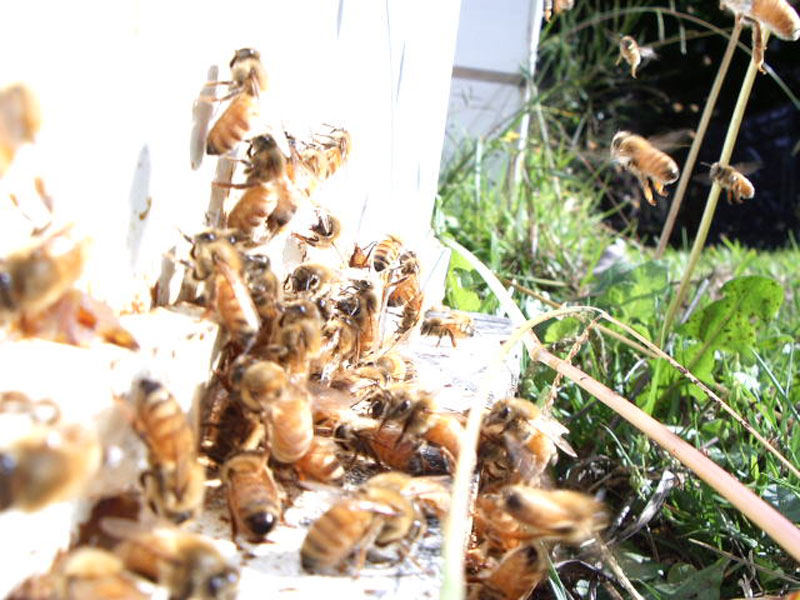
Our customers have an exceptionally high repeat purchase rate, which is truly the greatest joy for us. We are deeply grateful for your continued patronage and expectations for our products, and we feel a great sense of responsibility at the production site. Today, I would like to share part of an email that we send to customers each time they make a purchase. “At this time of year, the bees are in good spirits due to their abundant honey stores, and they are delicate and adorable. They are unlikely to sting anyone.”
In the photos you see, the area where the bees are concentrated is called the “entrance.” At this time of year, there are frequent mass attacks by carnivorous hornets, which often results in the worker bees being killed and their larvae stolen. To protect them, we only open the entrance to the size of a matchbox. The first level of the hive is the queen’s domain, primarily for laying eggs and rearing the brood. The second level is called the “queen excluder,” where a grid prevents the larger queen from passing through, making it a designated storage area for the worker bees’ honey. During the peak of the nectar flow, third and fourth levels are added. Our practice is stationary beekeeping, but in Japan’s migratory beekeeping, where beekeepers follow blooming flowers, you won’t see such multi-level hives due to the scarcity of nectar sources.
By the way, the reason we tilt the hive forward is to prevent rainwater from entering. The surface of the hive becomes yellowish in places, mainly due to the propolis resin that the bees collect from coniferous forests. They use this resin to coat the inside of the hive for sterilization purposes. Compared to Brazilian propolis, New Zealand propolis has a less appealing color and scent due to the difference in origin plants and bee species, making it less pleasant to consume. As for the Strong Manuka Honey, although it’s something we face every year, we are always concerned about the level of antibacterial activity. Even with products from the exact same region, the activity level can vary greatly from year to year—sometimes it’s very high, and other times it doesn’t show at all. It’s truly a mystery.
The mechanism behind the production of active substances is still not well understood, and since there is no solution for this, we have no choice but to accept these outcomes as natural products of the great outdoors. To use a somewhat grand expression, it truly feels like we are doing our best and then leaving the rest to fate. In the end, the final determinants of quality and quantity are nothing other than the weather and the health of the bees. I pray that we will be able to harvest good bee products again next season. We are committed to providing as many customers as possible with products that satisfy them, all while being mindful of the environment here in New Zealand. The above is just a small portion, but we tailor the information and content we share with each customer based on their purchase frequency and timing. Providing accurate information related to our products is a fundamental part of our company’s policy.
يتمتع عملاؤنا بمعدل شراء متكرر استثنائي للغاية، وهذا حقًا يمثل أعظم سعادة لنا. نحن ممتنون بعمق لدعمكم المستمر وتوقعاتكم العالية تجاه منتجاتنا، ونشعر بمسؤولية كبيرة في موقع الإنتاج. اليوم، أود أن أشارك جزءًا من البريد الإلكتروني الذي نرسله للعملاء في كل مرة يقومون فيها بالشراء: “في هذا الوقت من السنة، تكون النحل في حالة معنوية عالية نظرًا لوفرة مخزون العسل لديهم، وهم رقيقون ولطيفون للغاية. من غير المرجح أن يلسعوا أي شخص.”
في الصور التي ترونها، تُعرف المنطقة التي يتركز فيها النحل باسم “المدخل”. في هذا الوقت من السنة، تحدث غالبًا هجمات جماعية من الدبابير المفترسة، والتي تؤدي غالبًا إلى قتل العاملات وسرقة يرقات النحل. لحمايتهم، نقوم بفتح المدخل فقط بحجم علبة الكبريت.
المستوى الأول من الخلية هو مملكة الملكة، ويُخصص أساسًا لوضع البيض وتربية اليرقات. المستوى الثاني يسمى فاصل الملكة، حيث يمنع الشبك مرور الملكة الكبيرة، مما يجعلها منطقة مخصصة لتخزين عسل العاملات. أثناء ذروة تدفق الرحيق، يتم إضافة المستويين الثالث والرابع. ممارستنا هي تربية النحل الثابتة، أما في اليابان، في تربية النحل المتنقلة حيث يتبع النحالون الأزهار المتفتحة، فلن ترى خلايا متعددة المستويات بسبب ندرة مصادر الرحيق.
وبالمناسبة، السبب في إمالة الخلية للأمام هو لمنع دخول مياه الأمطار. يصبح سطح الخلية أصفر اللون في بعض الأماكن، ويرجع ذلك بشكل رئيسي إلى راتنج البروبوليس الذي يجمعه النحل من الغابات الصنوبرية. يستخدم النحل هذا الراتنج لتغطية داخل الخلية لأغراض التعقيم.
مقارنة بالبروبوليس البرازيلي، يتميز بروبوليس نيوزيلندا بلون ورائحة أقل جاذبية بسبب اختلاف النباتات الأصلية وأنواع النحل، مما يجعله أقل متعة عند الاستهلاك. أما بالنسبة لـ Strong Manuka Honey، فرغم أنه أمر نواجهه كل عام، إلا أننا دائمًا نشعر بالقلق بشأن مستوى النشاط المضاد للبكتيريا. حتى بالنسبة للمنتجات من نفس المنطقة بالضبط، يمكن أن يختلف مستوى النشاط بشكل كبير من سنة إلى أخرى—في بعض الأحيان يكون عاليًا جدًا، وفي أحيان أخرى قد لا يظهر على الإطلاق. إنه لغز حقيقي.
الآلية وراء إنتاج المواد الفعالة لا تزال غير مفهومة جيدًا، وبما أنه لا يوجد حل لذلك، لا مفر لنا سوى قبول هذه النتائج كمنتجات طبيعية من أحضان الطبيعة. للتعبير بطريقة فخمة، يبدو حقًا وكأننا نبذل قصارى جهدنا ثم نترك الباقي للقدر. في النهاية، العوامل النهائية لتحديد الجودة والكمية ليست سوى الطقس وصحة النحل. أدعو الله أن نتمكن من حصاد منتجات نحل جيدة مرة أخرى في الموسم القادم. نحن ملتزمون بتوفير منتجات ترضي أكبر عدد ممكن من عملائنا، مع مراعاة البيئة هنا في نيوزيلندا. ما سبق هو مجرد جزء صغير، ولكننا نخصص المعلومات والمحتوى الذي نشاركه مع كل عميل وفقًا لتكرار الشراء وتوقيته. إن توفير معلومات دقيقة تتعلق بمنتجاتنا يعد جزءًا أساسيًا من سياسة شركتنا.