
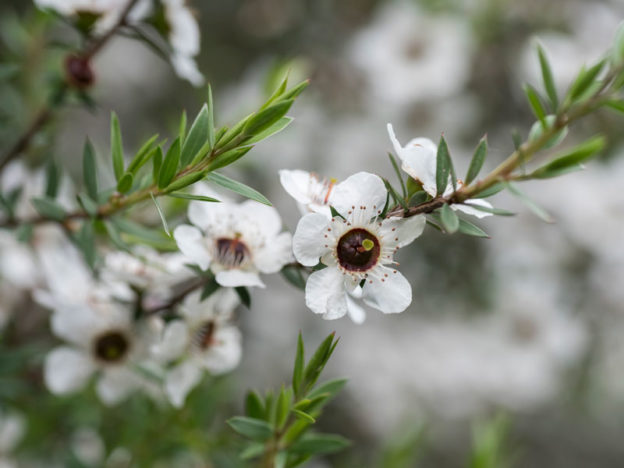
The honey flow season for Manuka generally peaks in the summer, though it varies significantly by region and by Manuka tree variety. In New Zealand, if you wish to see Manuka flowers, there are even varieties that bloom in mid-winter. The most spectacular blooming occurs during the Manuka season, which also differs depending on the region and type of Manuka tree. The flowers range in color from white to pink, with some striking mutations that approach red. These are sold as ornamental garden varieties, but they secrete very little nectar. To obtain high-activity Manuka honey, the flowers must be white and have single petals.
The Incanum variety, known for its high activity, has pure white flowers. Manuka flowers with even a hint of pink are less likely to produce functional Manuka honey. In areas where pink flowers bloom, even placing beehives there would not yield honey with the desired properties. Once, I was having coffee at the Starbucks in my hometown’s Hamamatsu Castle Park. Japanese-style public restroom nearby, I noticed a potted Manuka plant in full bloom in the flower bed. I remember feeling unexpectedly delighted by this discovery—it was a double-flowered variety with red blossoms. It seems these ornamental, cultivated Manuka plants are also available in Japan. The encounter lifted my spirits, and my thoughts wandered back to New Zealand… I was wondering if the hives set up in the Manuka forest were thriving, with the bees in good health.
I often find myself wondering if they have enough food to last through the winter’s chill… My thoughts would drift from the sweltering heat of Hamamatsu Castle Park to the beekeeping site deep in the mountains of New Zealand in midwinter. As I mentioned before on this blog, beekeeping falls under the classification of animal husbandry. It’s said that when you raise living creatures, you can’t completely distance yourself from them, and beekeeping is no exception, though the degree may vary. It’s only natural that I worry about their well-being. Each time significant weather changes occur—be it heavy rain or strong winds—I feel anxious, but whenever I see them buzzing happily around the apiary, I always breathe a sigh of relief. I believe this sentiment is shared by cattle and sheep herders as well.
يبلغ موسم ازدهار المانوكا ذروته عادةً في فصل الصيف، إلا أنّ توقيته يختلف باختلاف المناطق وأنواع أشجار المانوكا. وفي نيوزيلندا، يمكن مشاهدة بعض الأنواع وهي تتفتح حتى في منتصف الشتاء، لكن أروع مشاهد الإزهار تكون خلال موسم المانوكا الرئيسي، الذي تختلف ألوان زهره بين الأبيض النقي والوردي، وأحيانًا تظهر طفرات نادرة تميل إلى الأحمر.
تُزرع هذه الأنواع الجميلة لأغراض الزينة، غير أنها تفرز القليل جدًا من الرحيق. أما العسل النشط عالي الجودة فلا يمكن الحصول عليه إلا من زهورٍ بيضاءَ ذات بتلةٍ واحدة. فصيلة Incanum، المعروفة بنشاطها العالي، تُزهر بزهورٍ بيضاء ناصعة؛ أما الزهور التي تميل إلى الوردي، فنادراً ما تنتج عسلاً يحمل الخصائص العلاجية الحقيقية للمانوكا.
في إحدى المرات، كنت أحتسي قهوتي في مقهى “ستاربكس” المطلّ على حديقة قلعة هاماماتسو في مسقط رأسي، وبالقرب من دورة المياه العامة ذات الطراز الياباني، لفت انتباهي وجود نبتة مانوكا مزروعة في أصيصٍ صغيرٍ وقد تفتحت أزهارها الحمراء المزدوجة. غمرتني سعادة مفاجئة، وكأن جزءًا من نيوزيلندا قد حضر إليّ في تلك اللحظة. علمت لاحقًا أن هذه الأنواع الزخرفية متاحة أيضًا في اليابان، وكانت تلك اللحظة كافية لتعيدني بالذاكرة إلى غابات المانوكا في نيوزيلندا… تسللت إلى ذهني صور المناحل هناك بين الجبال،
أتساءل: هل النحل بخير؟ هل لديهم ما يكفي من الغذاء لمواجهة برد الشتاء القارس؟ وأنا في حرارة هاماماتسو، وجدت أفكاري تحلّق بعيدًا نحو برد نيوزيلندا الأبيض، حيث يعمل النحل في صمتٍ متناسقٍ مع الطبيعة. كما ذكرت سابقًا، تربية النحل تندرج ضمن فئة تربية الماشية، وحين تعتني بمخلوقاتٍ حية، لا يمكنك أن تنأى بنفسك عنها تمامًا — فثمة رابط خفيّ يربطك بها. كلما تغيّر الطقس — مطر غزير أو رياح عاصفة — يتملكني القلق، لكن حين أراها تحلّق بفرحٍ حول المِنحل، أتنفس الصعداء ويغمرني شعور بالطمأنينة.
أعتقد أن هذا الشعور تشترك فيه جميع الكائنات التي ترعى حياةً أخرى — سواء أكان مربّي نحلٍ أم راعي ماشيةٍ أو غنم. إنها رابطة الرحمة والمسؤولية، التي تجعل الإنسان يدرك أنه جزءٌ من دورة الحياة ذاتها، وليس مجرد مراقبٍ من بعيد.