
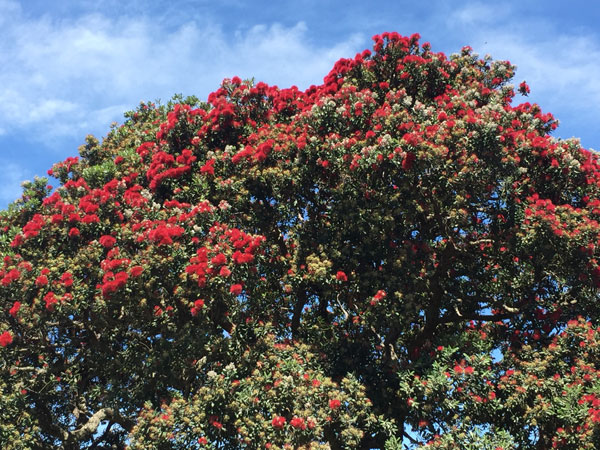
The tree shown in the image is called Pohutukawa, a name derived from the Maori language. As Christmas approaches, it bursts into bloom with vibrant red flowers. Because of this, the British settlers gave it the name “Christmas Tree.” The flower’s shape resembles a larger version of a thistle bloom. These trees are commonly found along coastal areas and can grow into magnificent giants. Their branches spread out horizontally from the base, and their height is impressive.
I often think how grand it would be to have one of these trees in a home garden. During the nectar flow season, bees swarm around these flowers, creating a lively buzz. At the base of the petals, especially in the morning, there is an abundance of clear nectar that tastes subtly sweet with a pleasant aroma when tasted. Honey made from Pohutukawa nectar crystallizes into a pure white form, with a refined sweetness and a rich fragrance. Compared to honey from clover or other sources, it offers not just sweetness but a flavor that remains enjoyable and never gets tired of eating.
Since Pohutukawa trees thrive along the coastline, they are constantly exposed to sea breezes, which imparts a slight saltiness to the nectar—a distinctive characteristic of this honey. Placing beehives under these trees results in honey with exceptional purity. As my home is close to the coast, our bees often collect nectar from these trees as well. I recall my wife once buying “salt candy” from a local Japanese grocery store. It had a unique sweetness that stood out.
When I was a child, my mother used to celebrate my birthdays by making oshiruko (sweet red bean soup) or amazake (sweet sake) and would always add a pinch of salt at the end, saying it enhanced the sweetness. Being a child, I was puzzled by the relationship between salt and sweetness. Pohutukawa honey shares this characteristic—its taste is refined and absolutely delicious. My mother is now 101 years old, living each day with remarkable vitality, which I attribute to the benefits of bee products. While Pohutukawa honey doesn’t possess the notable functional properties of Manuka honey, it is undeniably one of the most flavorful honeys I’ve ever tasted.
وكثيرًا ما أتخيّل كم سيكون مدهشًا أن تتزيّن بها حدائق المنازل؛ إذ تتحول الشجرة في موسم تدفّق الرحيق إلى مركز يفيض بالحياة، حيث تحوم النحل حول أزهارها بإيقاعٍ حيّ نابض. وعند قاعدة البتلات، وخصوصًا في ساعات الصباح الأولى، يتجمع رحيق صافٍ بنكهة لطيفة وحلاوة خفيفة وعطر تعبق به الحواس. أما العسل المستخرج من رحيق بوهوتوكاوَا، فيتبلور إلى لون أبيض نقي، بطعم راقٍ وعطرٍ غني، وهو عسل يتجاوز في تميّزه عسل البرسيم وغيره؛ إذ لا يقتصر على الحلاوة المجردة، بل يحمل نكهة تبقى ممتعة ولا يُملّ منها.
وبسبب نمو هذه الأشجار على السواحل، تتعرّض باستمرار لنسيم البحر، مما يضفي على رحيقها لمسةً لطيفة من الملوحة—وهي سمة خاصة تُميّز هذا النوع من العسل. وعند وضع خلايا النحل تحتها، نحصل على عسلٍ بالغ النقاء. وبسبب قرب منزلي من الساحل، كثيرًا ما يتغذّى نحلنا على رحيق هذه الشجرة كذلك.
أتذكّر أن زوجتي اشترت ذات مرة “حلوى مالحة” من متجر ياباني محلي، وكانت تحمل حلاوة فريدة لا تُنسى. وعندما كنت طفلًا، كانت والدتي—التي كانت تحتفل بعيد ميلادي بصنع الأوشيروكو أو الأمازاكي—تضيف دومًا رشّة صغيرة من الملح في النهاية، مؤكدة أن ذلك يزيد الحلاوة. وكنتُ أستغرب حينها العلاقة بين الملح والحلاوة. عسل البوهوتوكاوَا يشترك في هذه الخاصية؛ فطعمه راقٍ ولذيذ بشكل استثنائي.
واليوم تبلغ والدتي 101 عام، وما زالت تتمتع بنشاط مدهش، وأعزو ذلك إلى فضل منتجات النحل. ورغم أن عسل البوهوتوكاوَا لا يملك الخصائص الوظيفية البارزة التي يمتاز بها عسل المانوكا، إلا أنه—وبلا شك—واحد من أرقى وأشهى أنواع العسل التي تذوّقتها في حياتي.