
Last time, I wrote about swarming and how it poses a risk for beekeepers, and that preventing it requires removing queen cells before new queens can develop. However, given that the work is done amidst tens of thousands of bees, completely eliminating all queen cells is an almost superhuman task, even for the most skilled beekeepers. Most queen cells are easy to spot, but some are quietly built in the less noticeable corners of the frames. These are the ones that tend to be overlooked. For the bees, removing every newly formed queen cell is a matter of survival, as beekeepers systematically destroy their carefully raised future queens.
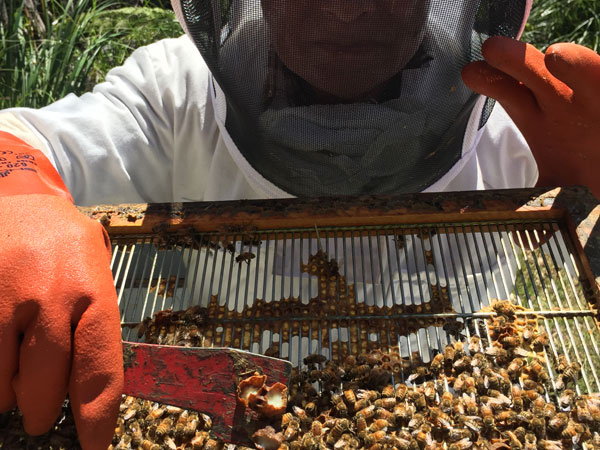
This is purely my imagination, but I can’t help but feel that bees have evolved with a sort of intelligence encoded in their DNA, allowing them to secretly nurture new queens without human detection. I’ve often come across queen cells that are cleverly concealed, almost camouflaged, in ways that are hard to spot at a glance. It almost seems like a product of evolutionary adaptation, developed over generations of being managed by humans. These queen cells are removed using a hive tool, an essential beekeeping tool. Often, I find them filled with a generous amount of royal jelly (see image). I gather this jelly, and during the drive home, I pop the entire comb cell into my mouth. Royal jelly has a unique, intense tartness and a stimulating taste and aroma.
Eating this royal jelly while driving prevents drowsiness, no matter how tired I am. Combining it with Manuka honey offers synergistic health benefits, something I’ve personally experienced and confirmed through reports from long-term customers. Incidentally, with swarming, if you’re fortunate enough to catch a swarm at the right moment, it’s possible to add an extra colony. There are various other methods to increase bee colonies, but the most common is to separate a group and create a queenless state, thereby stimulating the development of a new queen.
في المرة السابقة تحدثتُ عن ظاهرة التطريد وكيف تشكل خطرًا حقيقيًا على مربي النحل، وأن الوقاية منها تتطلّب إزالة بيوت الملكات قبل أن تكتمل فيها تربية ملكات جديدة. غير أن أداء هذا العمل وسط عشرات الآلاف من النحل يجعل مهمة إزالة جميع بيوت الملكات مهمة شبه مستحيلة، حتى بالنسبة لأكثر المربين مهارة وخبرة. فمعظم بيوت الملكات يسهل رؤيتها، لكن بعضها يُشيَّد بخفاء في الزوايا غير الظاهرة من الإطارات — وهذه بالتحديد هي التي يسهل التغافل عنها. وبالنسبة للنحل، فإن إزالة كل بيت ملكة جديد هو معركة بقاء، لأن المربي يقوم بشكل منهجي بتدمير الملكات المستقبلية التي عملت الشغالات على تربيتها بعناية.
وقد يكون هذا من نسج خيالي، لكنني لا أستطيع إلا أن أشعر بأن للنحل قدرًا من “الذكاء الوراثي” المتراكم في شيفرته الجينية؛ ذكاء يسمح له بتربية ملكات جديدة بعيدًا عن أعين البشر. فكثيرًا ما أصادف بيوت ملكات مبنية بطريقة ماكرة، مموّهة، تكاد تتخفّى حتى عن العين المدققة. ويبدو الأمر وكأنه سلوك تطوري تشكّل عبر أجيال طويلة من التفاعل مع الإنسان. ويتم إزالة هذه البيوت باستخدام أداة أساسية في تربية النحل تُسمّى أداة الخلية (Hive Tool).
غالبًا ما أجد هذه البيوت ممتلئة بكمية وفيرة من الهلام الملكي (رويال جيلي). وعندما أعود بالسيارة إلى المنزل، أضع كامل الخلية الصغيرة في فمي. يتميز الهلام الملكي بطعمٍ حاد منعش، ونكهةٍ عطرية نفاذة لا تشبه أي شيء آخر.
وأثناء القيادة، أتناول هذا الهلام الملكي، فيزول الشعور بالنعاس تمامًا مهما بلغ الإرهاق، وكأن له قدرة طبيعية على تنشيط الحواس وإعادة صفاء الذهن. وعند دمجه مع عسل المانوكا، تنشأ فائدة صحية متعاظمة، وقد اختبرت هذا الأثر بنفسي وتلقيت عنه تأكيدات عديدة عبر السنوات من عملاء يستخدمون منتجاتنا بانتظام.
ومن الجدير بالذكر أنه في حالات التطريد، إن حالفك الحظ وتمكنت من التقاط الطرد في اللحظة المناسبة، يصبح بالإمكان إضافة خلية جديدة تمامًا. وهناك طرق متعددة لزيادة عدد الطوائف، إلا أن أكثرها شيوعًا هو فصل مجموعة من النحل وخلق حالة “عديمة الملكة”، مما يحفّز النحل على تطوير ملكة جديدة بطريقة طبيعية ومدروسة.