
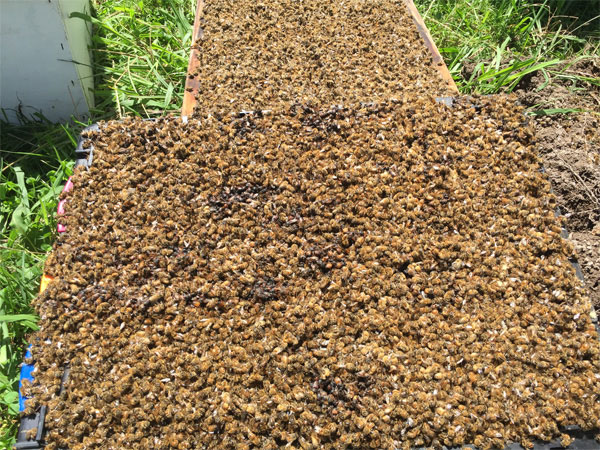
At the apiary where I base my work, I have placed about 50 colonies of bees that I raised this year. Since it’s the harvesting season, I became distracted by work at other apiaries and ended up neglecting the hives for about three weeks, which was a mistake. Mite damage was observed. This season tends to have a high incidence of mite infestations, so I had hung herbal-based ribbons in the hives as a mite deterrent. However, I noticed that mites resistant to the active ingredients in these herbs had emerged. To effectively prevent mite infestations, it’s important to periodically use deterrents with different active ingredients. This is because mites, with their rapid generational turnover, quickly develop resistance.
The insecticide I used this time was something I hadn’t used in this apiary for a long time, so I thought it would be safe. Unfortunately, A careless attitude led to damage. After applying the pesticide, I should have immediately checked its effectiveness. In the end, I had to quickly replace it with a different pesticide that had a different active ingredient, which helped to reduce the damage. However, the mite infestation spread rapidly and unexpectedly, resulting in piles of dead mites. It was truly frightening. It’s truly frustrating to see a carefully raised colony suffer a setback. As I mentioned earlier, there are discussions about introducing spiders, natural predators of mites, to combat this issue, and it would be a blessing if this could provide a solution. However, using natural enemies requires considerable caution and time for research and verification. If done recklessly, it could have a significant impact on the ecosystem, so the process of implementing such a solution naturally takes time.
في المنحل الذي أُقيم فيه عملي، وضعت هذا العام نحو خمسين خلية نحل قمت بتربيتها بعناية. وبما أن الموسم كان موسم جني العسل، انشغلتُ بأعمال في مناحل أخرى، الأمر الذي أدى—عن غير قصد—إلى إهمال هذه الخلايا لمدة تقارب ثلاثة أسابيع. وكان ذلك خطأً واضحًا. عند عودتي، لاحظت ظهور أضرار ناجمة عن العثّ.
يُعرف هذا الموسم بارتفاع معدلات الإصابة بالعثّ، ولذلك كنت قد علّقت في الخلايا شرائط طاردة تعتمد على مكوّنات عشبية. غير أنني سرعان ما أدركت أن سلالات من العثّ أصبحت مقاومة للمواد الفعّالة الموجودة في تلك الأعشاب. وللوقاية الفعّالة من العثّ، من الضروري تغيير المواد الطاردة بشكل دوري واستخدام مركّبات ذات مواد فعّالة مختلفة، إذ إن العثّ—بفضل سرعة تعاقب أجياله—يطوّر مقاومة في وقت قصير جدًا.
المبيد الذي استخدمته هذه المرة لم يكن قد استُخدم في هذا المنحل منذ فترة طويلة، ولذلك افترضتُ أنه سيكون آمنًا وفعّالًا. إلا أن هذا الافتراض، المقرون بنوع من التراخي، أدى إلى نتائج مؤسفة. كان ينبغي عليّ التحقق فورًا من فعالية المبيد بعد استخدامه. وفي نهاية المطاف، اضطررت إلى استبداله بسرعة بمبيد آخر ذي مادة فعّالة مختلفة، الأمر الذي ساهم في الحد من الأضرار.
ومع ذلك، كانت سرعة انتشار العثّ غير متوقعة، ووجدت أكوامًا من العثّ النافق داخل الخلايا—مشهدًا كان صادمًا بحق. إن رؤية خلية نحل تمّت تربيتها بعناية تتعرض لمثل هذا التراجع أمر يبعث على الإحباط العميق.
وكما ذكرت سابقًا، تُناقش حاليًا إمكانية إدخال العناكب، بوصفها أعداءً طبيعيين للعثّ، كوسيلة لمكافحة هذه المشكلة. ولو أمكن أن يشكّل ذلك حلًا مستدامًا، لكان نعمة حقيقية. غير أن استخدام الأعداء الطبيعيين يتطلب قدرًا كبيرًا من الحذر، ووقتًا طويلًا للبحث والتحقق. فأي تطبيق متسرّع قد يُحدث تأثيرات جسيمة على النظام البيئي ككل، ولهذا فإن السير في هذا الاتجاه يستدعي صبرًا والتزامًا علميًا عميقًا.