
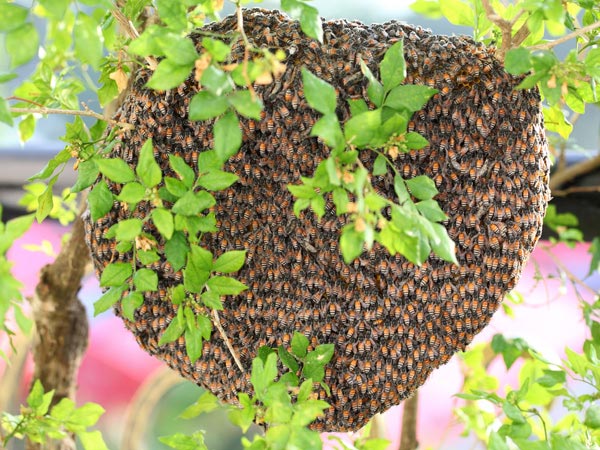
A large high-pressure system has come from the Australian continent, and the weather has been stable lately. Until yesterday, strong spring winds had been blowing, but today is particularly calm and warm. I had a feeling that something might happen on a day like this, and that intuition turned out to be correct. Yes, the beekeeping phenomenon known as swarming occurred. A swarm of bees hung down in a large mass from the grapevine trellis near the hive, forming a tight cluster. If I didn’t act quickly, they might escape, so I swiftly prepared an empty hive and fixed it directly beneath the cluster of bees. I then shook the branch where the bees were hanging to dislodge them. Since the queen is usually in the middle of the swarm, once she is inside, the rest will follow—and just like that, a new colony can be established.
As I have mentioned about swarming before, when the hive becomes full of stored honey and larvae, the bees begin preparing for a split. To create a new queen, the bees construct queen cells, which are special brood cells where the queen will develop. They feed the larvae royal jelly to ensure that the queen will grow. At this stage, the old queen, along with nearly half of the bees in the hive, will leave to form a new colony. They often have the habit of temporarily settling on a nearby shrub or tree before leaving. By capturing this swarm and housing it, you can successfully increase the number of colonies. Swarming colonies, in particular, tend to stay in the hive once captured and will usually grow the colony steadily. These swarms tend to establish themselves as strong, independent colonies, as they work hard to become self-sufficient.
It is possible to artificially create a queen bee to increase the number of colonies, but swarms that occur naturally tend to have much stronger colony strength. However, if swarming happens too frequently, the entire colony can become weakened. Therefore, it is important not to neglect regular hive inspections. When queen cells are found, they must be removed. Even with careful attention, situations like the one I encountered today are common. Fortunately, I discovered the swarm early this time, so it was a lucky situation. Warm, windless spring days require special caution.
If the queen bee is not in the swarm that has fallen, the worker bees will not enter the hive. Instead, they will fly around and reassemble near the queen bee, so the same process must be repeated to capture them. If this isn’t done quickly, the scout bees, which have already located a new potential home, will lead the swarm away, so prompt action is crucial. Once the bees are safely housed in the hive, it’s a relief. From there, as long as the hive is managed normally, there shouldn’t be any issues. During the swarming season, nectar sources are abundant, and the colony will naturally build itself. The original hive will produce a new queen, and after mating, she will begin laying eggs, allowing the colony to develop as a regular hive again.
امتدّ مرتفعٌ جويّ كبير قادم من القارة الأسترالية، فاستقرّ الطقس في الأيام الأخيرة. وحتى يوم أمس، كانت رياح الربيع القوية تهبّ باستمرار، أمّا اليوم فكان هادئًا ودافئًا على نحوٍ لافت. كان لديّ شعور بأن شيئًا ما سيحدث في يوم كهذا، وقد صدق حدسي بالفعل. نعم، لقد وقع ذلك المشهد المعروف في عالم تربية النحل باسم التطريد.
تجمّع سربٌ من النحل في كتلة كبيرة متدلّية من تعريشة كرمة العنب القريبة من الخلية، مشكّلًا عنقودًا متماسكًا. لو لم أتحرّك بسرعة، لكان من الممكن أن يفرّ السرب. لذا سارعتُ إلى تجهيز خليةٍ فارغة وثبّتُها مباشرةً أسفل تجمع النحل، ثم هززتُ الغصن الذي كانوا معلّقين به لإسقاطهم. وبما أنّ الملكة تكون عادةً في قلب السرب، فما إن تدخل الخلية حتى يتبعها الباقون، وبهذا تتأسس مستعمرة جديدة بسلاسة.
كما ذكرتُ سابقًا، عندما تمتلئ الخلية بالعسل واليرقات، يبدأ النحل بالتحضير للانقسام. ولإنتاج ملكة جديدة، يبني النحل بيوتًا خاصة تُعرف ببيوت الملكات، حيث تُغذّى اليرقات بغذاء ملكات النحل لضمان نموّ الملكة. في هذه المرحلة، تغادر الملكة القديمة مع ما يقارب نصف أفراد المستعمرة لتشكيل مجتمع جديد. وغالبًا ما تستقر مؤقتًا على شجيرة أو شجرة قريبة قبل المغادرة. وإذا تم التقاط هذا السرب وإيواؤه، يمكن زيادة عدد المستعمرات بنجاح. تتميّز أسراب التطريد بأنها تميل إلى الاستقرار داخل الخلية بعد التقاطها، وتنمو بثبات، لتتحوّل إلى مستعمرات قوية ومستقلة تسعى بجدّ للاعتماد على نفسها.
صحيح أنّه يمكن زيادة عدد الخلايا اصطناعيًا عبر إنتاج ملكات، إلا أنّ الأسراب التي تتكوّن طبيعيًا غالبًا ما تمتلك قوة وحيوية أكبر. غير أنّ تكرار التطريد بشكل مفرط قد يُضعف المستعمرة بأكملها، لذا لا بدّ من الفحص الدوري للخلية. وعند العثور على بيوت ملكات، يجب إزالتها. ومع ذلك، حتى مع أقصى درجات العناية، فإن مواقف كهذه شائعة. ولحسن الحظ، اكتشفتُ السرب مبكرًا هذه المرة، فكان يومًا موفقًا. إنّ أيام الربيع الدافئة والخالية من الرياح تتطلّب حذرًا خاصًا.
إذا لم تكن الملكة ضمن السرب الذي سقط في الخلية، فلن يدخل النحل العامل إليها، بل سيظلّ يحوم ويعيد التجمّع بالقرب من الملكة، ما يستدعي تكرار العملية. وإن لم يتم ذلك بسرعة، فإن نحل الكشّافة، الذي يكون قد حدّد موقعًا جديدًا، سيقود السرب إلى الرحيل. لذلك، فإن السرعة عامل حاسم. وما إن يستقرّ النحل بأمان داخل الخلية، حتى يسود شعور بالاطمئنان. بعد ذلك، ومع إدارة طبيعية للخلية، لا ينبغي أن تظهر مشكلات. ففي موسم التطريد، تكون مصادر الرحيق وفيرة، وتبني المستعمرة نفسها تلقائيًا. أمّا الخلية الأصلية، فستنتج ملكة جديدة، وبعد تزاوجها تبدأ بوضع البيض، لتعود المستعمرة إلى نموّها الطبيعي من جديد.